


30th May 2025

Welcome back to the Shock of the New campaign, which originally ran five stories from July – November 2023, concluding with a downloadable e-book comprising all stories and artwork.
Part II further investigates “The shock of the new” highlighting the dynamic relationship between innovation and the human response to change. It acknowledges that whilst change can be challenging, it can also lead to profound advancements and opportunities for societal and sustainable development.
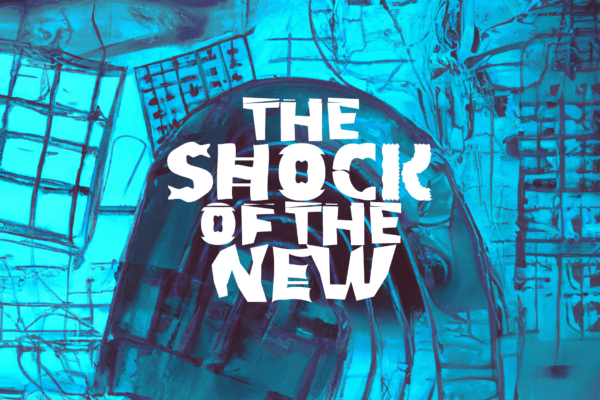
Supporting artwork featured throughout this article is a continuation of the ai generated artwork featured in the original Shock of the New campaign. It uses ai prompts to depict emerging markets and technologies in different modern art styles – A nod to the inspiration of Robert Hughes’ documentary and book of the same name, along with the recent disruption and adoption of artificial intelligence technologies.
Interested in knowing more? Click Here.


Recent history has been defined by turbulence and supply chains have become the front line of disruption.
From the COVID-19 pandemic and Russia’s invasion of Ukraine to the Red Sea shipping crisis and ongoing semiconductor shortages, each event has exposed the fragility of global value chains.
For UK manufacturing, these shocks have acted as both a warning and a wake-up call. It is no longer enough to focus solely on cost-efficiency; today’s supply chains must be shockproof.
What does it take to build a truly resilient supply chain? Resilience must now be considered a competitive advantage, and outsourcing has long played a critical role in this transformation. Drawing on government responses, key pillars to resilience and outsourcing as a resilience multiplier, we set out to determine what can make the manufacturing community shockproof in an age of change and uncertainty.
According to McKinsey, companies can now expect supply chain disruptions lasting a month or longer every 3.7 years. The British Chambers of Commerce reported in 2023 that over 50% of UK manufacturers were facing supply chain difficulties, citing delays, increased costs, and a lack of critical materials.
This fragility stems from decades of optimisation around speed and cost, often at the expense of resilience. Lean inventories, globalised sourcing, and just-in-time logistics all contributed to hyper-efficiency – but left little room for error. When COVID-19 hit, the cracks became chasms.
Today, the game has changed. Governments are responding. The UK’s Critical Imports and Supply Chains Strategy, launched in January 2024, seeks to bolster national resilience across key sectors including defence, semiconductors, energy, and medical supply chains. Businesses must do the same, not as a temporary fix but as a long-term strategic imperative.
Aerospace (commercial)
66.8
1,564
7.4
Automotive
56.1
6,412
7.3
Mining
46.7
2,240
8.4
Petroleum products
45.5
6,327
8.9
Electrical equipment
41.7
556
5.4
Glass & cement
40.5
805
6.2
Machinery & equipment
39.9
1,084
6.5
Computers & electronics
39.0
2,914
5.9
Textiles & apparel
38.9
788
7.8
Medical devices
37.9
431
8.7
Chemicals
34.9
1,018
5.7
Food & beverage
30.0
1,578
7.6
Pharmaceuticals
24.0
1,436
6.0
Supply chain disruption losses equal 42% of one year’s earnings before interest, taxes, depreciation, and amortisation on average over a decade.
Data source: McKinsey

Building resilience means embedding robustness, flexibility and foresight into the supply chain’s DNA.
Here are five interlinked pillars that define a modern, shockproof approach:
Reliance on a single source of supply or a single geography magnifies risk. Diversification means developing a portfolio of suppliers across different regions, with dual or multi-sourcing strategies where feasible. You’re building backups and agility into procurement.
Advanced digital tools such as digital twins, AI-driven forecasting, and blockchain-based traceability are transforming supply chain visibility. Real-time data allows manufacturers to detect disruptions earlier, model risks, and respond faster.
There is a growing shift towards regional supply chains. Nearshoring or reshoring can reduce transportation risks and carbon footprint, simplify logistics and improve customer responsiveness. The UK’s interest in domestic lithium mining is one example of localising critical inputs.
No company operates in isolation. A resilient supply chain is one where OEMs, suppliers, logistics providers, and customers share data, planning cycles, and risk mitigation strategies. This is where collaborative ecosystems and manufacturing partnerships shine.
Building sustainable supply chains is under ever-increasing demand; for their obvious benefits in environmental responsibility, but also of equal importance, is their stability. Ethical sourcing, circular economy principles, and energy-efficient logistics reduce exposure to regulatory and reputational risk.

One of the most under-appreciated routes to supply chain resilience is through strategic outsourcing to trusted manufacturing partners. For machine builders and OEMs, outsourcing can offer more than production capacity, it can deliver supply chain confidence.
Established and trusted manufacturing and outsourcing partners inherit, manage and optimise supply chains. Outsourcing transfers some risk burden from the OEM to the partner. But more than risk transference, it also facilitates shared problem-solving. Outsourcing partners often bring multi-sector experience, knowledge of material and part substitutes, and contingency planning frameworks. Outsourcing partners come with pre-validated supply chains and ecosystems built over many years. They’ll include robust supplier networks, standardised procurement practices, and localised logistics options. So, this is equally important for OEMs trying to establish a supply chain – by outsourcing, OEMs can inherit supply chain resilience without having to build them from scratch.


Manufacturing partners typically have the flexibility to scale up or down rapidly, absorb fluctuations, and mitigate bottlenecks. This operational agility is crucial in responding to unforeseen events or sudden demand shifts.
Regulatory environments are tightening, particularly around sustainability, quality, and traceability. Manufacturing partners with embedded ISO, ESG, and digital systems ensure compliance continuity across the supply chain.
With streamlined onboarding processes, rapid NPI capabilities, and dedicated supply chain orchestration, outsourcing can dramatically accelerate go-to-market timelines without compromising on quality or resilience.
Whilst potentially very demanding on their time, for OEMs and machine builders looking to build shockproof supply chains, these actions are critical. Alternatively, of course, many of these are activities inherited by outsourcing partners when outsourcing has been deemed the best strategic decision.
Identify critical nodes and potential single points of failure. Evaluate resilience maturity across tiers.
Choose partners not just on cost or capability, but on their ecosystem, agility, and transparency.
Implement tools that provide end-to-end traceability, demand sensing, and scenario planning.
Use predictive analytics to model risk scenarios. Develop business continuity and disaster recovery plans.
Define KPIs for resilience, such as time-to-recovery (TTR), supplier risk scores, and on-time fulfilment under duress.

Resilience is no longer a defensive posture. In the current climate, it is a differentiator. OEMs and machine builders that can deliver consistently despite disruptions; win customer trust, secure market share, and build reputational capital.
Moreover, resilient supply chains are often more innovative. They are less burdened by reactive firefighting and more able to invest in improvement. They are also more aligned with ESG priorities, making them attractive to investors, customers, and talent alike.
The shocks of recent years have proven that supply chain fragility is a systemic risk. For manufacturers, the question is no longer whether to invest in resilience, but how.
Through diversification, digitisation, collaboration and strategic outsourcing, the foundations of shockproof supply chains are within reach.
Those who act now will protect their operations and define the next era of competitive manufacturing.
The Shock of the New campaign comprises of several stories published since July 2023. Part I of the campaign included 5 stories and a downloadable e-book. Part II will consist of five more stories and another e-book collection, releasing in 2025. More stories can be found in the carousel below.
The entire collection can be found here.
“The shock of the new” highlights the dynamic relationship between innovation and the human response to change. It acknowledges that whilst change can be challenging, it can also lead to profound advancements and opportunities for societal and sustainable development.
The fourth industrial revolution has a new engine and manufacturing is on the cusp of its most transformative era since the invention of the assembly line.

Recent history has been defined by turbulence and supply chains have become the front line of disruption. These shocks have acted as both a warning and a wake-up call.

At the heart of the green transformation lies a somewhat critical element: skills. Shock of the New reacts to the 2024 Global Green Skills Report.

The Shock of the New campaign returns, as Tony Hague states that if the UK continues to outsource its green technology production overseas, it risks squandering a once-in-a-generation opportunity.

Over 70 pages, collecting every story from the Shock of the New campaign. Includes bonus content and available for instant free download.

What if by understanding what works across other regions, successful approaches can be combined to build a collaboration blueprint for UK manufacturers to call their own.
In an era where environmental concerns are at the forefront of global discourse, the UK manufacturing sector finds itself at a crossroads. To flourish, there is a compelling argument that it must undergo a profound transformation towards sustainability.

The Greentech landscape and opportunity for innovation and investment is driving the sustainability agenda and encompasses a wide range of new technologies.

There are various types of machines and devices that contribute to the circular economy by enabling resource conservation, waste reduction, recycling, and the reuse of materials. The demand increase in these varieties has been more progressive in recent years.

When adopting new technologies and exploring emerging industries, there is often a disruptive element involved. They can challenge established norms, disrupt traditional industries, and require individuals and organisations to adapt to new ways of doing things.

One of the UK’s leading strategic manufacturing specialists is tapping into the UK’s unprecedented investment in upgrading the electricity grid.
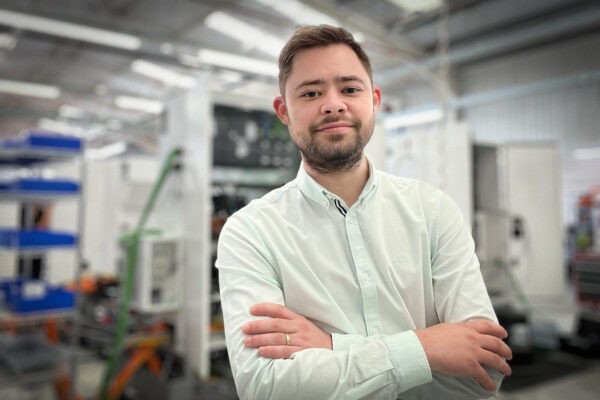
As Britain accelerates investment in grid infrastructure, protection and control capacity could become a critical delivery constraint.

The appointment of a new Prime Minister inevitably brings renewed debate about the direction of the UK economy and what it could mean for business.

Ian Knight, Chief Information Officer at PP Control & Automation (PP C&A) challenges the prevailing, often vague narrative around AI adoption and reframes the conversation around a more practical starting point: operational constraints.
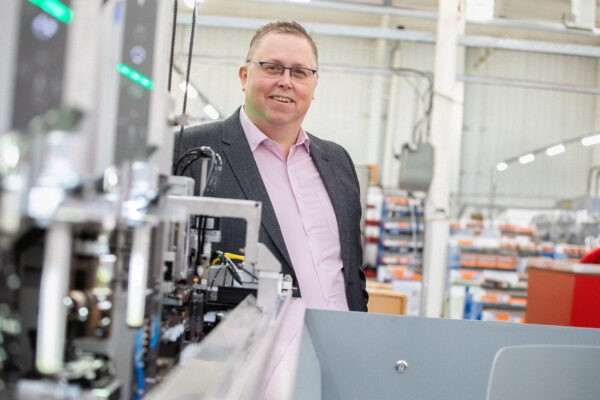
Artificial intelligence is no longer a distant concept for manufacturers. It is already being explored across quotation, production planning, engineering, quality, supply chain and customer service functions. Yet, for many organisations, the gap between experimentation and meaningful operational impact remains difficult to close.

A leading aquaculture specialist – that is changing the way fish are vaccinated safely – has signed a major manufacturing deal.

On paper, defined discipline-specific suppliers can look organised. However, every additional supplier introduces another handoff, and every handoff creates another point where time, quality, communication and accountability can be lost.

Very rarely does growth not surface because an OEM lacks ambition. Shortcomings arise because operating models built to support such ambition don’t evolve quickly enough.


