


19th March 2026
In most machine building businesses, change is still treated as an exception. A late-stage drawing revision, component substitution, or wiring tweak discovered during build. Each one is handled, resolved, and signed off. And then everyone moves on. But what if that’s the wrong way to think about it? What if change isn’t the disruption to the system but the system itself?
Ask any OEM or machine builder how many Engineering Change Notices (ECNs) they process on a typical project, and the answer is rarely small.
Changes come from everywhere:
Evolving customer requirements
Component obsolescence or availability issues
Design improvements
Compliance updates (UL508A, CE, UKCA)
Discoveries during build, wiring or test
And critically, many of these changes are not optional. They are necessary to deliver a working, compliant, high-performing machine. Yet despite this, many organisations still operate as though the design is fixed and change is a deviation.
In reality, the design is fluid and change is continuous. This disconnect is where problems can surface. When change is treated as an exception, systems aren’t designed to absorb it. Instead, it creates friction across the business:
Late-stage changes require redraws, re-approvals, and re-issuing documentation. Engineering teams become reactive, pulled into constant revision cycles rather than forward design.
On the shop floor, unmanaged change leads to builds starting from outdated drawings, rework and strip-out, or uncertainty over “latest revision”. The result is often lost time, rising costs, and frustrated teams.
A small design change can trigger new part numbers, scrapped or redundant stock, urgent re-orders. Without control, procurement becomes a firefighting function rather than a strategic one.
Changes introduced late in the process can undermine FAT procedures, certification requirements, and documentation integrity. Particularly in regulated environments, this is both inefficient and carries risk.
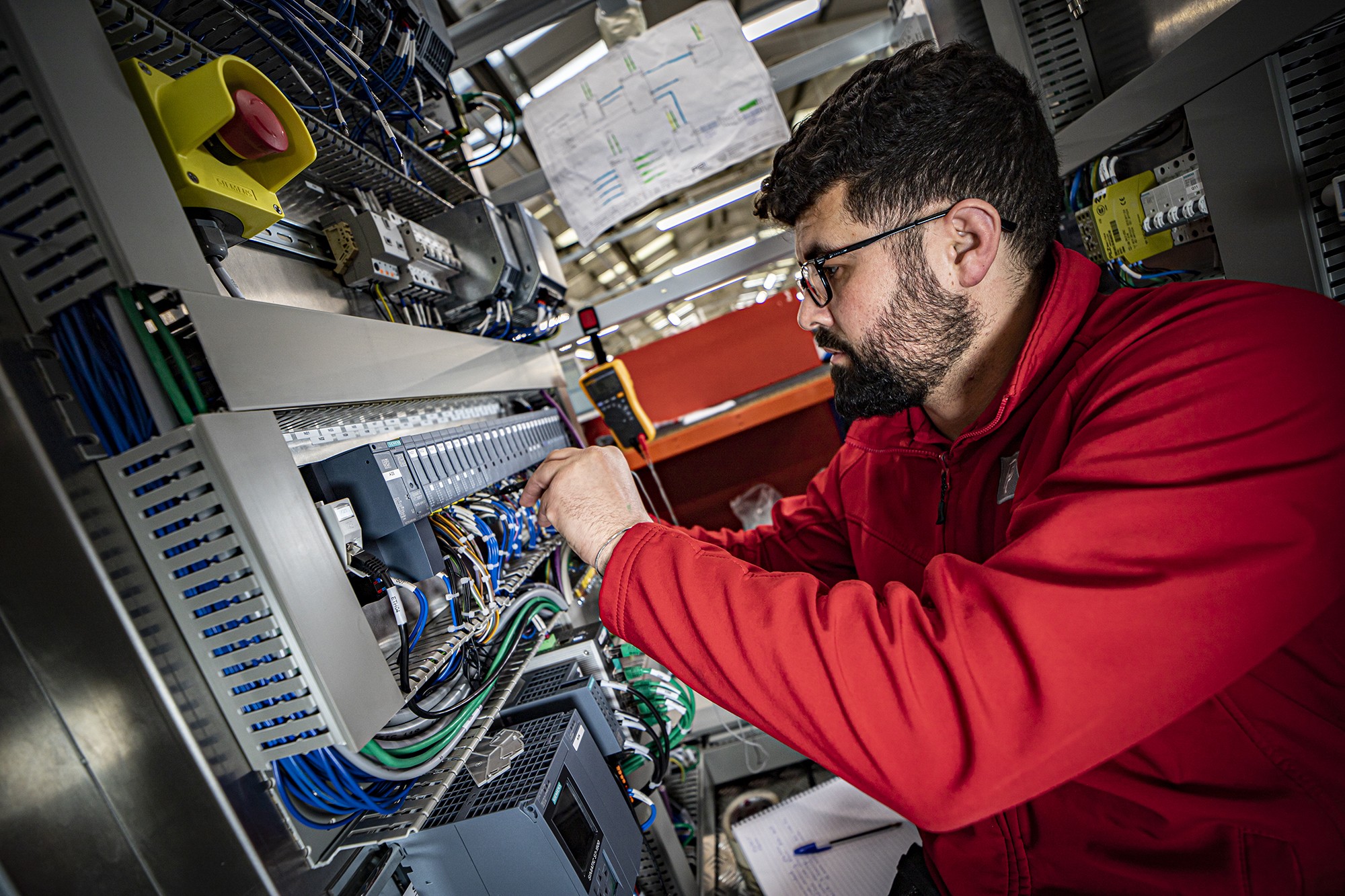
Most businesses can see the visible impact of change, including delays and rework, or additional labour. But the deeper cost is less obvious, yet more damaging. Poorly managed change erodes:
confidence (teams no longer trust documentation)
predictability (lead times become unreliable)
scalability (every project becomes a one-off challenge)
Over time, this creates a business that is:
busy… but not productive
active… but not efficient
growing… but not scalable
If change is inevitable (and it is) then the goal should be to design systems that expect it. This requires a fundamental shift in mindset from “How do we reduce change?” to “How do we absorb change without disruption?”
Organisations that handle change well, essentially, operationalise it.
Clear, consistent workflows for raising, reviewing, approving, and communicating changes. Not just within engineering, but across production, procurement, and quality.
It’s not enough to have version control on paper. Teams on the shop floor need confidence they’re working to the latest issue, clear visibility of what has changed, and easy access to updated documentation. If the system isn’t usable, it won’t be used.
Change therefore must flow through drawings, BOMs, test procedures, and certification records. Particularly where standards like UL508A apply, traceability is critical.
Some of the most valuable changes originate from panel build, wiring, and FAT. Capturing and feeding this insight back into design improves future builds and reduces repeat issues.
At a higher level, this means modular designs, standardised components, and configurable architectures; so that change can be accommodated without starting from scratch.

Businesses that embrace a strategic approach can respond faster to customer requirements, adapt to supply chain disruption, maintain compliance without delay, and ultimately, scale production with confidence. In contrast, those that treat change as an exception remain locked in reactive cycles.
There’s a useful way to reframe engineering change. Instead of seeing ECNs as interruptions to your process, start seeing them as signals that designs are evolving, and requirements are being refined, or even that the “reality” is being understood.
The strategic shift that unlocks the advantage is embedded in a simple question:
Are you set up to respond to them or be disrupted by them?
Engineering change is a natural and necessary part of building complex machines. The real issue isn’t the presence of change, but whether your business is structured to handle it. Because in modern machine building, we know a few things:
complexity is increasing
supply chains are less predictable
compliance requirements are tightening
customer expectations are rising
And let’s face it, that can only drive more change – certainly not less! So, the organisations that succeed won’t be the ones that try to eliminate it. They’ll be the ones that recognise a simple truth; that change isn’t the disruption, it’s the system.
At PP Control & Automation, we work with machine builders and OEMs operating in exactly this environment, where change is constant and the cost of mishandling it is high. And with an outsourcing model that absorbs these changes, what we’ve learned is that to make change easy and never a bottleneck to growth, we have to have systems purposely built, around that change. That means:
structured ECN processes that connect engineering to the shop floor
robust revision control that works in real-world conditions
integrated documentation that supports compliance
and feedback loops that turn change into continuous improvement
It’s this combination that turns change from a source of disruption into a source of control.

One of the UK’s leading strategic manufacturing specialists is tapping into the UK’s unprecedented investment in upgrading the electricity grid.

As Britain accelerates investment in grid infrastructure, protection and control capacity could become a critical delivery constraint.

The appointment of a new Prime Minister inevitably brings renewed debate about the direction of the UK economy and what it could mean for business.

Ian Knight, Chief Information Officer at PP Control & Automation (PP C&A) challenges the prevailing, often vague narrative around AI adoption and reframes the conversation around a more practical starting point: operational constraints.
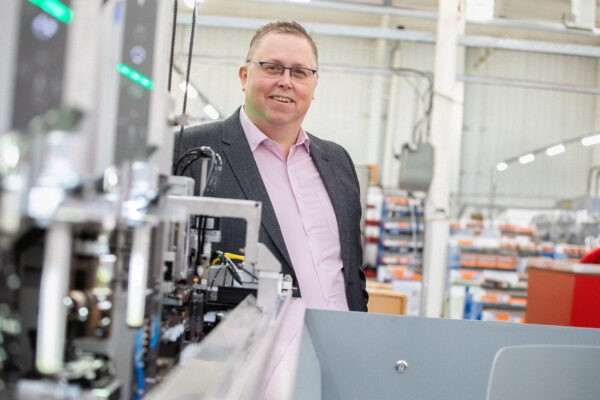
Artificial intelligence is no longer a distant concept for manufacturers. It is already being explored across quotation, production planning, engineering, quality, supply chain and customer service functions. Yet, for many organisations, the gap between experimentation and meaningful operational impact remains difficult to close.

A leading aquaculture specialist – that is changing the way fish are vaccinated safely – has signed a major manufacturing deal.

On paper, defined discipline-specific suppliers can look organised. However, every additional supplier introduces another handoff, and every handoff creates another point where time, quality, communication and accountability can be lost.

Very rarely does growth not surface because an OEM lacks ambition. Shortcomings arise because operating models built to support such ambition don’t evolve quickly enough.


