


19th October 2023
PP Control & Automation CEO, Tony Hague was one of 10 leaders invited to form a sustainability roundtable, hosted by Midlands Business Insider Magazine.
The roundtable discussion centres around what more can be done to encourage SMEs to go green.
When making an investment decision, what do investors look for from a manufacturer and their commitments to ESG? How does the government’s changing stance on sustainability affect long-term industrial strategy or what support would be necessary to make a bigger commitment viable? And are strategies for sustainability rising to the top of the business agenda because of customer pressures?
Important questions on sustainability and ESG are put to this expert panel in the latest edition (November 2023) of Midlands Business Insider Magazine.

Every story so far from the campaign.
“The shock of the new” highlights the dynamic relationship between innovation and the human response to change. It acknowledges that whilst change can be challenging, it can also lead to profound advancements and opportunities for societal and sustainable development.
The fourth industrial revolution has a new engine and manufacturing is on the cusp of its most transformative era since the invention of the assembly line.

Recent history has been defined by turbulence and supply chains have become the front line of disruption. These shocks have acted as both a warning and a wake-up call.

At the heart of the green transformation lies a somewhat critical element: skills. Shock of the New reacts to the 2024 Global Green Skills Report.

The Shock of the New campaign returns, as Tony Hague states that if the UK continues to outsource its green technology production overseas, it risks squandering a once-in-a-generation opportunity.

Over 70 pages, collecting every story from the Shock of the New campaign. Includes bonus content and available for instant free download.

What if by understanding what works across other regions, successful approaches can be combined to build a collaboration blueprint for UK manufacturers to call their own.
In an era where environmental concerns are at the forefront of global discourse, the UK manufacturing sector finds itself at a crossroads. To flourish, there is a compelling argument that it must undergo a profound transformation towards sustainability.

The Greentech landscape and opportunity for innovation and investment is driving the sustainability agenda and encompasses a wide range of new technologies.

There are various types of machines and devices that contribute to the circular economy by enabling resource conservation, waste reduction, recycling, and the reuse of materials. The demand increase in these varieties has been more progressive in recent years.

When adopting new technologies and exploring emerging industries, there is often a disruptive element involved. They can challenge established norms, disrupt traditional industries, and require individuals and organisations to adapt to new ways of doing things.

One of the UK’s leading strategic manufacturing specialists is tapping into the UK’s unprecedented investment in upgrading the electricity grid.
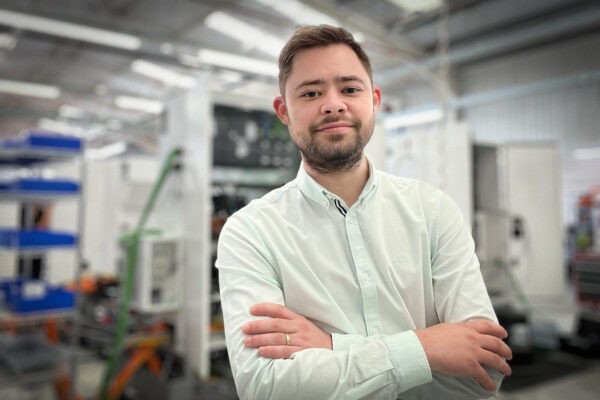
As Britain accelerates investment in grid infrastructure, protection and control capacity could become a critical delivery constraint.

The appointment of a new Prime Minister inevitably brings renewed debate about the direction of the UK economy and what it could mean for business.

Ian Knight, Chief Information Officer at PP Control & Automation (PP C&A) challenges the prevailing, often vague narrative around AI adoption and reframes the conversation around a more practical starting point: operational constraints.
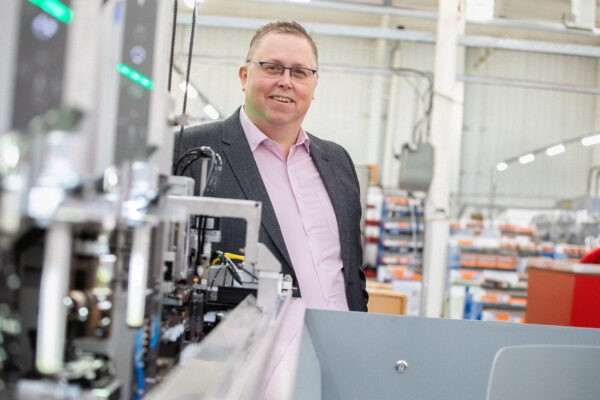
Artificial intelligence is no longer a distant concept for manufacturers. It is already being explored across quotation, production planning, engineering, quality, supply chain and customer service functions. Yet, for many organisations, the gap between experimentation and meaningful operational impact remains difficult to close.

A leading aquaculture specialist – that is changing the way fish are vaccinated safely – has signed a major manufacturing deal.

On paper, defined discipline-specific suppliers can look organised. However, every additional supplier introduces another handoff, and every handoff creates another point where time, quality, communication and accountability can be lost.

Very rarely does growth not surface because an OEM lacks ambition. Shortcomings arise because operating models built to support such ambition don’t evolve quickly enough.


