


18th November 2025
Editorial 3/3
In The Hidden Cost of In-House, we uncover the operational pain points that often go unspoken but have a lasting impact on business performance. From skills shortages and missed delivery windows to bottlenecks in engineering and rising quality issues, each article reveals a hidden cost and shows how strategic outsourcing can eliminate it.
The original campaign includes 12 quickfire blogs which have earned trade media attention and have been reconstructed into a three-part editorial series and cribbed press releases.


The pressure on OEMs isn’t coming from a single source, it’s coming from all sides. Products are more complex, quality expectations are rising, and skilled labour is harder to find than ever.
Together, they’re creating a bottleneck that in-house teams are increasingly unable to break through. In this final edition of the hidden cost of ‘in-house manufacturing’, PP Control & Automation’s Richard Spears explores how these three forces are coming together to create a challenging puzzle and why outsourcing could be the best way of solving it.
Modern machine building demands more than ever before – more integration, more compliance, more intelligence, more precision. Product complexity continues to rise, yet many OEMs are relying on production models built for a much simpler time.
The result? A widening gap between what’s expected and what in-house teams are actually able to deliver.
At first, the cracks are small. A few minor reworks, a slipped test procedure, maybe even a component fitted incorrectly under pressure. But these issues aren’t anomalies. These are the first signals and real signs that internal production capacity, capability, or skill is no longer aligned with the sophistication of the product. And, if left unaddressed, those cracks will grow into delays, customer complaints, and costly reputational damage.
Quality is rarely compromised by choice. More often, it’s a consequence of overstretched teams working under increasing pressure. Skilled technicians are expected to absorb more complexity, faster. Engineers are pulled into production support to troubleshoot builds that aren’t fully productionised. Test procedures are compressed to meet shipping deadlines. There’s little time for continuous improvement. Instead, we settle for just enough time to get the job out of the door.
Compounding this is the industry-wide skills shortage. The workforce is ageing, recruitment pipelines are thinning and, as much as we want them to, apprenticeships can’t plug the gap quickly enough. For many OEMs, it’s no longer a matter of finding the right skills but holding onto them long enough to get the job done. That fragility means even modest fluctuations in headcount or workload can cause serious disruption to production.

At the same time, product designs are becoming more ambitious. Integrated systems, digital controls, safety features, diagnostics, connectivity. Each and every new function adds complexity to the build. And that complexity requires specialist knowledge, controlled environments, and tightly managed processes. When these don’t exist or simply aren’t given enough time to mature; manufacturing quality becomes reactive instead of embedded.
And then comes the biggest bottleneck of all: turning a prototype into something that can be built at scale. Many OEMs find themselves stuck between concept and manufacture, where great designs falter under the weight of in-house constraints. Engineering teams are caught in an endless loop of fixes. Builds are inconsistent and testing becomes guesswork. Sadly, the product, which should have pushed the business forward, becomes another source of stress.
Outsourcing offers a really important release valve, and this doesn’t just have to be for pressure. It can also be a release valve for risk. The right manufacturing partner brings in immediate capability: qualified teams, advanced integration experience, clean and ESD assembly areas, UL and compliance expertise, structured test environments, and scalable output. Strategic partners build and they industrialise. They take what’s been designed and make sure it can be built, repeatedly, reliably, profitably and to spec.
For OEMs facing a widening skills gap, this kind of external expertise is protection. It ensures continuity when internal capacity falters. It protects quality standards when production gets busy. And it frees up internal engineering to focus on product development, not repeat builds.
Importantly, outsourcing is a deliberate decision to build resilience into your operation. A choice to focus on what you do best – whether that’s designing machines, engineering solutions, or serving customers – whilst your partner handles the complexity of production with the right systems in place.
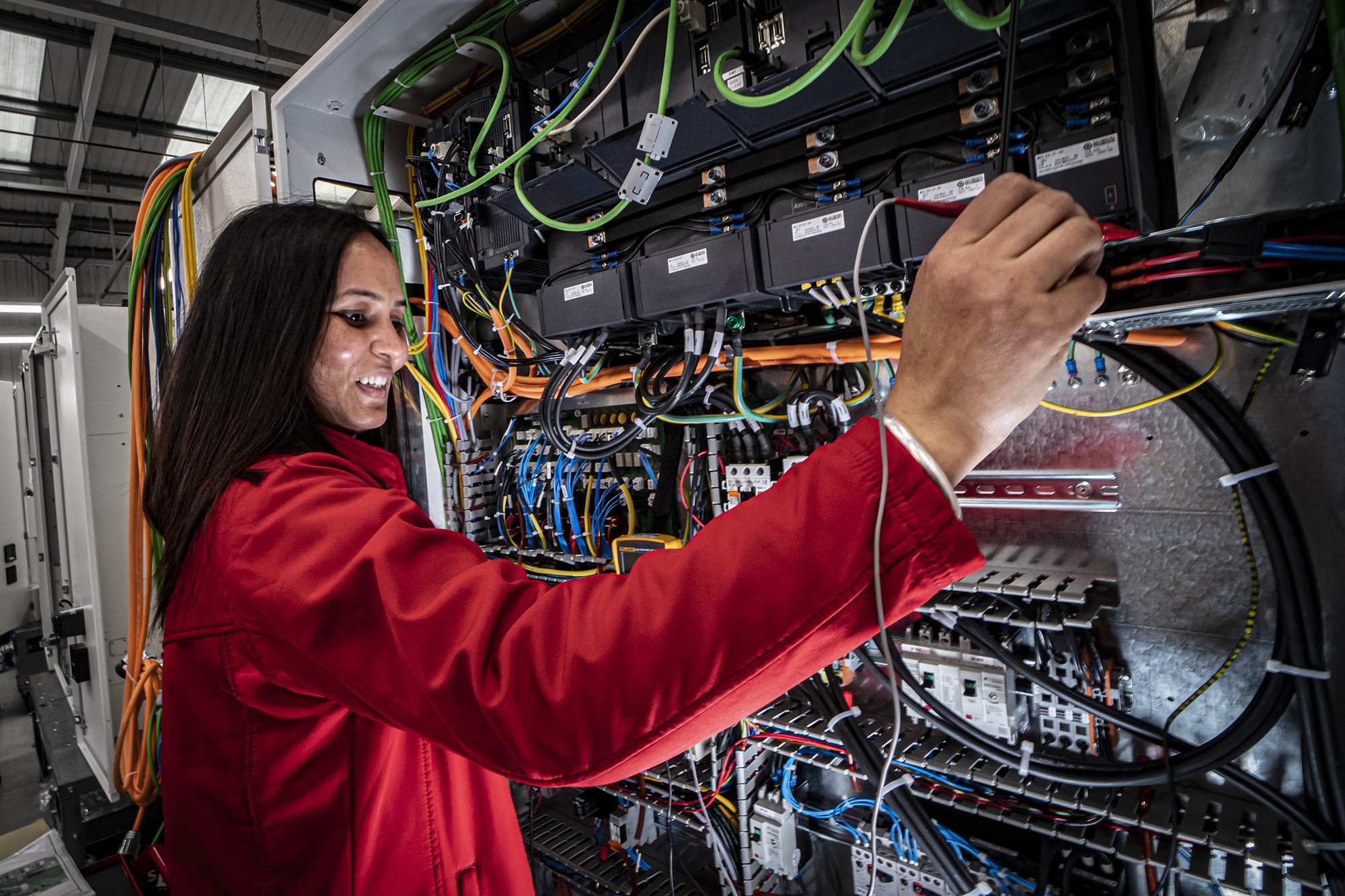
Manufacturers who make this shift early avoid quality risks and they go on to accelerate growth. On a positive note, they also shorten time-to-market, they enhance customer satisfaction, and they build products with the confidence that every unit will meet the standard, no matter how complex design becomes.
The longer OEMs try to manage this complexity alone, the greater the risk becomes. Talent will continue to be scarce. Products will continue to evolve. And internal teams will continue to bear the weight – until something gives.
If quality is slipping, if production can’t keep pace with design, or if the skills just aren’t there to meet demand, it’s not a production issue. It’s a strategic one. And it’s time to rethink what the price of ‘in-house’ is really costing you.
Richard Spears is Marketing Manager at PP Control & Automation, one of the UK’s leading outsourcing manufacturing specialists.Every year, the West Midlands-based business works with more than 20 of the world’s leading machinery builders, innovators and technology specialists, covering everything from energy and infrastructure, food and beverage, to machine tools, industrial automation and agritech.
If you enjoyed this editorial, there’s 12 quickfire blogs in the Hidden Cost of In-House series, compiled into a downloadable illustrated e-book.
Download the e-book using the button below or add it to your resource basket and browse more informative guides and collected stories in the Resource Centre.

For many machine builders and OEMs, keeping manufacturing and assembly in-house feels like the safest route. But beneath the surface of familiarity lies a growing burden… All stories from the Hidden Cost of In-House series compiled with illustrations.
Add to basket
In your basket
Hidden Cost of In-House 12/12: In machine building, success depends on where you direct your time, energy, and expertise. Yet for many OEMs, the focus has shifted away from where it creates the most value.

Hidden Cost of In-House 11/12: For many machine builders and OEMs, keeping production in-house feels like the most cost-effective way to operate. But when you dig deeper, the numbers often tell a different story.

Hidden Cost of In-House 10/12: For many machine builders and OEMs, innovation starts strong. But then comes the challenge: moving from concept to production.

Hidden Cost of In-House 9/12: In modern machine building, supply chains have become increasingly fragmented. And for many OEMs, managing these relationships has turned into an operational burden.

Hidden Cost of In-House 8/12: For many machine builders and OEMs, the opportunities have never been greater. Yet whilst the possibilities grow, many manufacturers are constrained by what’s happening much closer to home.

Hidden Cost of In-House 7/12: Machine builders are under constant pressure to innovate. Customers want smarter, faster, more integrated systems. But as products evolve, production demands do too.

Hidden Cost of In-House 6/12: For many machine builders and OEMs, a growing order book should be a cause for celebration. But too often, it brings the opposite feeling – pressure, panic, and the looming risk of letting customers down.

Hidden Cost of In-House 5/12: Every machine builder knows that quality is a reputation-maker or breaker. But as production complexity grows and internal pressures rise, many OEMs find themselves slipping into a reactive mode. Quality control becomes damage control.

Hidden Cost of In-House 4/12: Technical skill is the lifeblood of any machine builder. But across the sector, that capability is under threat.

Hidden Cost of In-House 3/12: For many OEMs, firefighting has become business as usual. But it’s also a major reason why forward planning never quite gets off the ground.

One of the UK’s leading strategic manufacturing specialists is tapping into the UK’s unprecedented investment in upgrading the electricity grid.
As Britain accelerates investment in grid infrastructure, protection and control capacity could become a critical delivery constraint.

The appointment of a new Prime Minister inevitably brings renewed debate about the direction of the UK economy and what it could mean for business.

Ian Knight, Chief Information Officer at PP Control & Automation (PP C&A) challenges the prevailing, often vague narrative around AI adoption and reframes the conversation around a more practical starting point: operational constraints.
Artificial intelligence is no longer a distant concept for manufacturers. It is already being explored across quotation, production planning, engineering, quality, supply chain and customer service functions. Yet, for many organisations, the gap between experimentation and meaningful operational impact remains difficult to close.

A leading aquaculture specialist – that is changing the way fish are vaccinated safely – has signed a major manufacturing deal.

On paper, defined discipline-specific suppliers can look organised. However, every additional supplier introduces another handoff, and every handoff creates another point where time, quality, communication and accountability can be lost.

Very rarely does growth not surface because an OEM lacks ambition. Shortcomings arise because operating models built to support such ambition don’t evolve quickly enough.


