


4th November 2024

Welcome to the first article in the Sustainability in UL Standards campaign, which brings to light the likely adjustments to standards in which machine builders and OEMs will want to be privy to, as they embark on bringing products to North American markets.
This opening article outlines the topic in question, with four key observations which over the coming weeks will be further explored by guest contributors.
As the manufacturing community increasingly leans towards sustainable practices, machine builders and OEMs find themselves at the centre of impact and progress. But there are several caveats to ‘doing the right thing’, that will almost certainly emerge. The implications for standards and certifications like UL508A for one, could be significant.
UL508A, primarily concerned with the safety of industrial control panels, may be poised for evolution. This article explores how the emerging sustainability trends are likely to reshape UL508A certification, providing both challenges and opportunities for manufacturers and stakeholders.
UL508A certification is crucial for manufacturers of industrial control panels in North America or those exporting to the region. It provides a guideline that ensures panels are built to certain safety standards, covering areas such as proper component usage, electrical wiring, and overall system reliability. Compliance with UL508A is not just about adherence to safety norms but also about gaining market acceptance and trust.
Before we delve deeper into the evolution of UL508A certification in response to sustainability trends, it is crucial to consider other complementary standards that influence the design and operation of industrial control panels. One such standard is NFPA 79, the Electrical Standard for Industrial Machinery, which plays a pivotal role in ensuring the safety and efficiency of machinery in the industrial sector.
NFPA 79 provides guidelines that align closely with UL508A, focusing on the electrical safety requirements for industrial machinery. As manufacturers strive to adopt more sustainable practices, NFPA 79 becomes increasingly relevant. This standard addresses several areas that are directly impacted by sustainability initiatives, such as energy efficiency, the use of environmentally friendly materials, and the safety protocols that ensure these new materials do not compromise the functionality and integrity of industrial machinery.

In recent years, the drive towards sustainability has become a dominant force across all sectors, including industrial manufacturing. This shift is about reducing environmental impact and enhancing efficiency, improving long-term operational costs, and meeting the evolving regulatory and consumer demands for greener products.
Four key areas of thought are almost unavoidable and become intriguing topics for UL and NFPA-focused discussion: materials, energy efficiency, product lifecycle, and global sustainability standards.
Thanks to guest contributions from experts in regulatory compliance and approvals, digital transformation and automation, and machine connectivity, alongside PP Control & Automation’s own engineering team, we’ll explore these key areas of thought to offer the latest opinion. These guest contributions will be published over the coming weeks right here in the blog.
But first, let’s better understand those four key areas of discussion.
There is now a growing need to integrate eco-friendly materials into control panels. This might include the use of recycled plastics, biodegradable composites, or less toxic components. The challenge for UL508A will be to ensure that these new materials meet safety standards without compromising performance.
NFPA 79 can guide manufacturers on how to safely incorporate sustainable materials into electrical systems. As the industry moves towards materials that are less harmful to the environment, adhering to NFPA 79 ensures that these materials meet rigorous safety standards, thus not undermining the reliability of the machinery.
Energy efficiency is a critical aspect of sustainable manufacturing. Future revisions of UL508A could incorporate standards that emphasise not only the safety but also the energy efficiency of control panels. This could mean stricter requirements for power consumption, better thermal management, and more efficient electrical designs.
NFPA 79 includes provisions that can help reduce the overall energy consumption of machinery. By aligning NFPA 79 with UL508A revisions focused on sustainability, manufacturers can optimise machinery for better energy efficiency without sacrificing safety or performance.
Another potential area of evolution for UL508A could involve lifecycle assessments of control panels. Standards might begin to consider the environmental impact of a panel from production through disposal. This comprehensive approach would encourage manufacturers to design for recyclability and repairability, reducing waste and extending the life of the panels.
NFPA 79 touches on aspects of the machinery lifecycle that are critical for sustainability, such as maintenance and end-of-life disposal. Ensuring that machinery is not only durable and maintainable but also recyclable aligns with broader sustainability goals, reducing waste and encouraging circular economy practices.
UL508A might need to align with international guidelines to ensure compatibility and competitiveness in the global market. This includes standards related to carbon footprint, greenhouse gas emissions, and the use of hazardous substances.
Complying with NFPA 79 in addition to UL508A not only enhances the safety and efficiency of industrial machinery but also positions manufacturers as leaders in sustainable practices. As global markets increasingly favour environmentally responsible products, adherence to these standards can provide a significant competitive edge. It demonstrates a commitment to the highest safety standards while embracing the imperative shift towards sustainability.
⇢ Adapting to new materials and technologies while maintaining or enhancing safety and performance.
⇢ Balancing cost implications of implementing sustainable practices and redefining products and materials.
⇢ Staying ahead of the regulatory curve and ensuring compliance across different markets.
⇢ Leading the market by adopting early standards for sustainability, thus gaining a competitive edge.
⇢ Enhancing brand reputation by demonstrating commitment to environmental responsibility.
⇢ Contributing to the broader goals of environmental sustainability, which could open up new markets and customer segments.

The integration of sustainability into UL508A certification, and the association of NFPA 79 standards to that directive represents a likely shift in the industrial control panel market that machine builders and OEMs should be privy to. It’s better to have foresight on matters of approval and regulation, than to be caught out by them without preparation – that perhaps, is the real value of this collaborative campaign – awareness.
Of course, it is imperative for stakeholders to embrace the sustainability agenda and innovation not just for compliance but for the health of our planet. The transition will offer a few caveats to UL508A and the management and compliance of the systems we build but will offer a unique opportunity to redefine the standards for greener futures.

The Sustainability in UL Standards Campaign explores the evolving intersection between UL standards, particularly UL508A certification, and sustainability. As machine builders and OEMs target the North American market, they must stay informed about potential regulatory changes driven by sustainability initiatives. The series delves into how sustainability trends are reshaping certification requirements, posing challenges such as material adaptation and cost balancing, while also presenting opportunities like enhanced brand reputation and market leadership.
Key themes include eco-friendly materials, energy efficiency, lifecycle assessments, and global compliance. The campaign’s goal is to raise awareness and equip stakeholders with foresight, enabling them to navigate this transformative shift and align with sustainability imperatives.
Want to stay up to date on UL content? Register for updates.
Stefano Muraro of Rockwell Automation explores specific evolutions of UL508A standards and the impact on industrial control panels, highlighting innovative, sustainable solutions.

In this guest contribution to the ongoing Sustainability in UL Standards campaign, Phil Murby, UK Commercial Manager at Lutze explores a different approach to the construction of a control panel.

In this guest contribution to the ongoing Sustainability in UL Standards campaign, Phil Murby’s insights provide practical guidance on aligning control panel wiring practices with sustainability and compliance, offering tangible solutions for both efficiency and environmental stewardship.

As the manufacturing community increasingly leans towards sustainable practices, machine builders and OEMs find themselves at the centre of impact and progress. But there are several caveats to ‘doing the right thing’, that will almost certainly emerge. The implications for standards and certifications like UL508A for one, could be significant.

European machine builders are increasingly eyeing the lucrative North American market. Ian Knight believes accessing the opportunity depends on your firm’s ability to strategically navigate standards and avoid the pitfalls of safety compliance.

PP Control & Automation has long been promoting the considerations to be mindful of when navigating UL 508A. When doing so, questions linking to NFPA often enter the discussion. This supplement offers some clarity on the relationship between the two.

PP C&A has signed a deal with Product Approvals to boost its product certification offer to global clients.

Having an understanding of the processes encompassing inspection and evaluation is a major facet to the right UL practice for OEMs and the often overlooked considerations and risks when converting European builds to US-ready machines or when looking to expand into North America with new machine builds altogether.

With the control panels built and the components selected, all under UL guidance, machine connectivity will bring the whole thing together but there’s a serious worry that all that hard work can be undone by not understanding the importance of cabling in relation to UL.

Many definitions used in systems implemented in North America have no equivalent in the design of industrial installations according to European regulations. The reason for this is not a simple problem of different terminology, but a different conceptual approach altogether.


PP C&A has over two decades of experience with the North American standards (UL, CSA & NFPA70/79) and can design and fully certify to cUL508a. Explore further here.
Also contributing to the campaign is Rockwell, a global leader in industrial automation and digital transformation, offering hardware, software, and services to enhance resilience, agility, and sustainability in manufacturing operations. Furthermore, we invite you to join us at Rockwell’s Technology Forum during November 2024.
Discover how to bridge your aspirations with the latest in technological advancements. Gain hands-on experience, expert insights, and expand your knowledge through interactive sessions, live demos, and peer collaboration. Explore the potential of smart manufacturing to boost asset performance, enhance product quality, ensure safety, and drive business value. Register now to embrace smart manufacturing and shape the future.
The Technology Forum will include sessions on North American standards. See dates for those session and how to register below.
| Date | Location |
|---|---|
| 12 November 2024 9:30 – 15:00 | Milton Keynes, UK Pitfield, Kiln Farm, Milton Keynes MK11 3DR Language: English |
| 13 November 2024 9:30 – 15:00 | Manchester, UK Unit 6, The Albion, Brunel Avenue, Salford M5 4BE Language: English |
| 14 November 2024 9:30 – 15:00 | Dublin, Ireland Swords Business Park, Brent House, Swords, Co. Dublin, K67 Y2V0 Language: English |
| 26 November 2024 9:30 – 16:00 | Warsaw, Poland Powazkowska 44C, 01-797 Warsaw Language: Polish |
One of the UK’s leading strategic manufacturing specialists is tapping into the UK’s unprecedented investment in upgrading the electricity grid.

As Britain accelerates investment in grid infrastructure, protection and control capacity could become a critical delivery constraint.

The appointment of a new Prime Minister inevitably brings renewed debate about the direction of the UK economy and what it could mean for business.

Ian Knight, Chief Information Officer at PP Control & Automation (PP C&A) challenges the prevailing, often vague narrative around AI adoption and reframes the conversation around a more practical starting point: operational constraints.
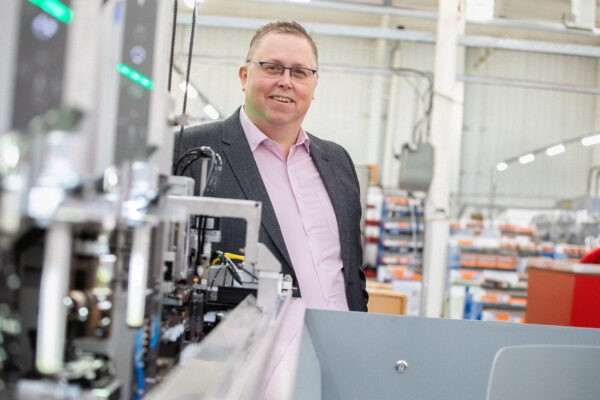
Artificial intelligence is no longer a distant concept for manufacturers. It is already being explored across quotation, production planning, engineering, quality, supply chain and customer service functions. Yet, for many organisations, the gap between experimentation and meaningful operational impact remains difficult to close.

A leading aquaculture specialist – that is changing the way fish are vaccinated safely – has signed a major manufacturing deal.

On paper, defined discipline-specific suppliers can look organised. However, every additional supplier introduces another handoff, and every handoff creates another point where time, quality, communication and accountability can be lost.

Very rarely does growth not surface because an OEM lacks ambition. Shortcomings arise because operating models built to support such ambition don’t evolve quickly enough.


