


22nd April 2024
The strategic integration of outsourcing has become a pivotal lever for growth amongst machine builders and OEMs. PP Control & Automation (PP C&A) is at the forefront of this movement, leveraging the power of collaboration to orchestrate measurable success through carefully designed outsourcing strategies.
These strategies are operational choices and transformative business decisions aimed at unlocking exponential growth potential across industries.
The decision to outsource can appear complex and it is most certainly significant, marked by a variety of factors that companies must navigate. Garry Myatt, Sales Director at PP C&A took part in a comprehensive Q&A just over a year ago, to provide insight into some important factors.
Having been well-received, this piece is a follow-up and reminder of some of the most pertinent of those insights and factors.
In the Q&A, Garry articulates that the journey toward outsourcing begins with a critical assessment of internal constraints – be it manpower, space, financial resources, or process capabilities. These constraints often surface during periods of critical need, revealing the limitations of internal solutions and highlighting the potential benefits of an external partnership.
However, the path to recognising outsourcing as a viable solution is not straightforward. Companies typically attempt to resolve operational bottlenecks internally, which may divert focus from core competencies – the essential activities that drive profit rather than drain resources. Herein lies the strategic nuance of outsourcing: it offers a way to address and alleviate these constraints without the substantial risks and investments associated with internal solutions.
To build a sense of security and make outsourcing trouble-free for machine builders and OEMs, an outsourcing partner like PP Control & Automation will take several measures.
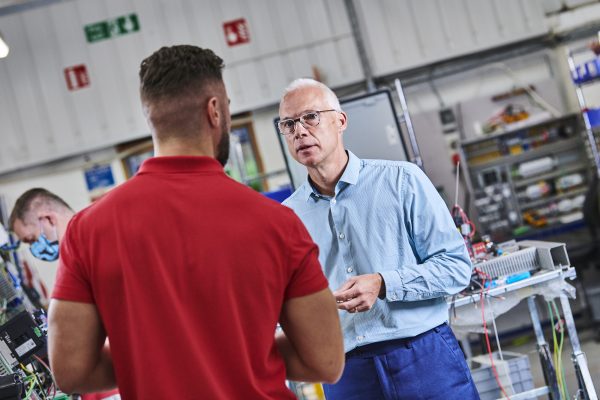
Letting go is often the most challenging act for machine builders and OEMs to face as they embark on an outsourcing partnership. But the right partner should fill you with confidence.

Sales Director, Garry Myatt brings experience to the topic of outsourcing and shines a light on PP C&A’s uppermost pledge: Making outsourcing easy.

Choosing to outsource is as much about timing and strategic alignment as it is about the decision itself. PP C&A invests considerable effort in understanding the specific challenges and pain points of their clients, facilitating a tailored approach to outsourcing. This involves not only a deep dive into the operational aspects of a potential client’s business but also an assessment of whether the timing is right for such a strategic shift.
For those organisations that might not be ready for outsourcing, it is worth emphasising one of Garry’s Q&A points – the importance of building trust and staying top of mind. This approach ensures that when the time is right, PP C&A is the first call they make. Honesty and integrity play crucial roles in these interactions, reinforcing the company’s commitment to true partnership rather than mere service provision.
Another area of importance is addressing what PP C&A refer to as the ‘niggling critters’ of outsourcing. These are the apprehensions that can arise as a decision is pending – will the partner uphold quality? Will cost and time overruns surface? Is IP at risk? And will values and principles align?

We get it. We’re no strangers to the apprehensions people have; intrusive thoughts manifesting like pesky little critters.
But you’re in the right place. This is where we…
The selection of an outsourcing partner is critical and multifaceted. It involves scrutinising various competencies of potential partners, such as their capability, security, size, supply chain skills, experience, approvals, innovation capabilities, and location. The right partner should not only match but also enhance the manufacturing capabilities of the outsourcing company. They should possess a robust financial standing, innovative supply chain management skills, and a strategic location that makes collaboration convenient.
Moreover, the relationship dynamics between the outsourcing partner and its customers are crucial. The chosen partner must be a good fit in terms of organisational culture and values, ensuring a smooth and synergistic collaboration. The financial health of the partner, their ability to handle the scale of needs, both current and future, and their proven track record in managing complex supply chains are all critical considerations that can make or break the success of the outsourcing partnership.
Can the outsourcing partner do a better job than you can? Do they have the expertise, people, skills and plant/automation to improve the production process, boost quality and help develop designs in the future?
The last thing you want to do is develop a strategic partnership with a company that is financially weak. Do credit checks, look at accounts and ownership.
Consider the complexity and scale of your outsourcing needs, not just for today but for the mid to longer term. Ensure that you would not represent either too large or too small a part of that company’s sales revenue.
For outsourcing to deliver the maximum benefit, then the activities associated with purchasing and supply chain management should be included. The outsourcing partner should have the capabilities and skills to inherit, manage and develop the associated supply chain. If you still must manage parts of it and the associated costs of purchasing/logistics that go with it, then you are not going to see the true benefits.
Look at who they are working with now and which manufacturers and markets they are involved in. You can tell a lot, very quickly, from the quality and standing of existing customers.
Outside of the obvious ISO approvals, do you require any specific approvals relevant to an industry sector or for a given export geography, such as UL/CSA for the US or Canadian markets?
Does the outsourcing partner have the types of engineering skills and innovation to help you develop your products and services? Skills, such as design for manufacture, should be strong and you should expect them to play a big part in improving the product from a technical and commercial perspective.
Asia and Eastern Europe, as well as other low-cost geographies, have held significant appeal for certain outsourcing services, particularly those that are labour intensive such as machining and casting. Again, consider the true cost of the relationship, including lead times, agility, and risk, including the need to retain design IP (a problem often seen in Asia). The current trend in the UK, as well as the USA, has been reshoring of outsourcing activities. Many companies have recognised the escalating costs, political unrest and other risks associated with managing a long-distance supply chain, resulting in identifying partners that are more local to them.
Corporate Social Responsibility (CSR) is becoming increasingly important for businesses when considering a new supplier. Many companies now factor in a supplier’s CSR practices and policies as part of their decision-making process, as it can impact the company’s reputation and relationship with customers, employees, and other stakeholders.
Additionally, CSR can also help a company to identify and mitigate potential risks, such as environmental or labour violations, and to ensure compliance with laws and regulations.
A supplier’s commitment to CSR can be an important indicator of their overall business practices and values, which can be important considerations for companies looking to form a long-term strategic partnership.
PP C&A takes a holistic view of outsourcing, emphasising the involvement of all departments from the onset of any partnership. This integrated approach ensures that from sales to engineering to project management, every team member contributes to the seamless transition and successful implementation of outsourcing projects.
Engineering teams, for instance, take a deep dive into the client’s data and operational specifics to ensure a smooth transition. They engage actively with client operations to gain a comprehensive understanding of the product, which helps in refining the production process right from the first build. Similarly, supply chain specialists focus on optimising logistics and supply management, ensuring that every aspect of the supply chain is efficiently managed to support the overarching goals of the outsourcing initiative.


PP C&A’s methodical approach to outsourcing is encapsulated in its 3D process – Discovery, Decision, and Delivery. This structured framework helps guide clients through the complexities of outsourcing, ensuring clarity and alignment at every stage.
The process begins with a thorough scoping of the project, followed by decision-making that involves detailed risk management and planning. The delivery phase focuses on executing the plan with precision, adhering to agreed timelines and quality standards, and continually evaluating outcomes against the original objectives.
There should always be a process of consideration when selecting the right outsourcing partner and understanding how that partner delivers against your requirements. That’s why PP C&A introduced the 3D process. It clearly defines the whole journey into three specific stages: Discovery, Decision, Delivery.
Add to basket
In your basket

A fundamental aspect of PP C&A’s outsourcing philosophy is their commitment to being easy to work with and its uppermost pledge of ‘making outsourcing easy’.
This ethos is embedded across all levels of the organisation and is a critical component of all client interactions. By fostering a culture of openness, transparency, and mutual respect, PP C&A ensures that clients feel comfortable and confident in their outsourcing decisions. This approach not only helps in building lasting relationships but also in facilitating a partnership that is based on shared goals.


The proof of PP C&A’s successful outsourcing model lies in their extensive repository of case studies. These case studies, endorsed by customers from diverse sectors, illustrate how the company has effectively managed and mitigated operational constraints, delivering significant benefits, and driving growth. Each case study serves as a testament to the company’s ability to make outsourcing not just a strategic decision, but a transformative one.
The journey toward effective outsourcing can seem complex at first and it will require a thoughtful and strategic approach. For companies like PP C&A, the promise of making outsourcing easy is not just a slogan but a comprehensive, actionable strategy that transforms potential challenges into avenues for success and growth.
This collection of case studies examines some of the recent strategic outsourcing partnerships delivering against several business pains for machine builders and OEMs. This guide collects case studies published during 2021.
Add to basket
In your basket
A leading aquaculture specialist – that is changing the way fish are vaccinated safely – has signed a major manufacturing deal.

Explore how PP Control & Automation helps machine builders and OEMs solve real operational challenges through strategic outsourcing.

One of the hospitality sector’s most significant innovations has been given a production boost thanks to the scale and outsourcing capability of PP Control & Automation.

Unique technology born in the heart of Oxfordshire is helping protect millions of electronic devices across the world and its impact is set to grow even further over the next eighteen months.

The way companies access inventory management is changing rapidly and leading the charge is Solihull-based Inventor-e.

PP Control & Automation and Hedinn are now engaged in their 13th project together and the largest yet, the construction of a new plant for Sildarvinnslan.

Play an interactive video with hotpoints that delve into the story behind the manufacturing partnership with Needham Group and the assembly of its N-Lase range of products.

A strategic manufacturing outsourcing partnership – built on trust, integrity and maximising each other’s production expertise – is celebrating ten years together with the launch of the world’s most productive EDM drilling machine.

This collection of case studies examines some of the recent strategic outsourcing partnerships delivering against several business pains for machine builders and OEMs, and how those partners are benefiting from the PP C&A approach.

Turning to the strategic manufacturing outsourcing expertise of PP Control & Automation could prove to be a pivotal decision for Needham Group as it aims to turn a £30m expansion blueprint into reality.

One of the UK’s leading strategic manufacturing specialists is tapping into the UK’s unprecedented investment in upgrading the electricity grid.

As Britain accelerates investment in grid infrastructure, protection and control capacity could become a critical delivery constraint.

The appointment of a new Prime Minister inevitably brings renewed debate about the direction of the UK economy and what it could mean for business.

Ian Knight, Chief Information Officer at PP Control & Automation (PP C&A) challenges the prevailing, often vague narrative around AI adoption and reframes the conversation around a more practical starting point: operational constraints.
Artificial intelligence is no longer a distant concept for manufacturers. It is already being explored across quotation, production planning, engineering, quality, supply chain and customer service functions. Yet, for many organisations, the gap between experimentation and meaningful operational impact remains difficult to close.

A leading aquaculture specialist – that is changing the way fish are vaccinated safely – has signed a major manufacturing deal.

On paper, defined discipline-specific suppliers can look organised. However, every additional supplier introduces another handoff, and every handoff creates another point where time, quality, communication and accountability can be lost.

Very rarely does growth not surface because an OEM lacks ambition. Shortcomings arise because operating models built to support such ambition don’t evolve quickly enough.


