


14th March 2024
Modular design in the context of electrical control & automation breaks down complex systems into modular components, with the ambition of improving manufacturing efficiency and facilitating easier assembly and maintenance.
For machine builders and OEMs, enhancing efficiency and flexibility of their machine’s electrical control & automation systems may be a competency best delivered through expert partners.
PP Control & Automation has been delivering this critical value add skillset for machine builders and OEMs for decades now.
Let’s break down why it’s important and how it’s done.
Machine builders and OEMs face the constant challenge of implementing high-quality electrical control & automation systems whilst optimising production costs. One key strategy to meet these demands is the adoption of Design for Manufacture and Assembly (DFMA).
DFMA becomes a guiding philosophy that emphasises efficiency, cost-effectiveness, and overall design excellence. DFMA comprises two key components: Design for Manufacture (DFM) and Design for Assembly (DFA).
DFM focuses on optimising the manufacturing processes, considering factors such as material selection, fabrication techniques, and ease of production. DFA, on the other hand, targets the assembly phase, aiming to simplify the construction of the final product.
In the context of modular automation systems, DFM ensures that each module is designed with manufacturability in mind. This involves selecting materials that are both cost-effective and readily available, as well as utilising fabrication techniques that align with mass production methods.
The goal of DFA is to minimise complexity, reduce the number of parts, and make the assembly process more intuitive and error resistant. When applied to modular control & automation systems, this means designing with standardised components, with standardised interfaces, connectors, and attachment points in mind, allowing for seamless plug and play integration.
Prioritising manufacturability and assembly simplicity is a strategic move to capture the added value in enhanced efficiency, cost reductions and improved reliability. DFMA sets the foundation for streamlined manufacturing processes, ensuring that modular systems are not only advanced in functionality but also optimised for practicality. Enabling the creation of systems that are also more flexible in adapting to diverse customer requirements is a key reason why adopting DFMA principles is so important for developing a competitive edge and pushing innovation.
A B Graphic International Ltd (ABG) originally engaged PP C&A to design and manufacture the electrical back plates on its Digicon 3 digital print finishing machine and delivering them to the ABG facility in Bridlington.
However, during the design engineering discussions, it quickly became apparent that a more value-added design would be beneficial, allowing for a modular, configurable and pre-wired (Plug & play) style solution with significant benefit.
Modular control system design
Distributed I/O
60% improvement in electrical fit-out time
Production capacity increased by over 50%
‘Plug & play’ style connectivity
Standardised power distribution
Eliminated 700 days of production /year
ABG now offer custom module configurations to customer specific machine requirements

“Thanks to our commitment to outsourcing, we are now more efficient and have cut production and sales lead times significantly. Importantly, PP has also given us the additional capacity that allows us to go after new business safe in the knowledge we can quickly ramp up production to cope with it.
“We have grown almost 50% over the last five years and this has been made possible thanks to the partnership we have established with PP C&A.”
Phil Robson
Operations Manager, ABG
One of the primary benefits of modular automation systems is the improvement in manufacturing efficiency. By designing components as interchangeable modules, machine builders can streamline the production process. Standardised modules can be pre-assembled, tested, and then integrated into various systems, reducing lead times and assembly complexities.
Machine builders adopting modular design can achieve a higher level of standardisation across their product lines. This not only simplifies the manufacturing process but also facilitates easier inventory management, leading to cost savings. With standardised modules, OEMs can respond more swiftly to customer demands, offering tailor-made solutions without the need for extensive redesign and reengineering.
Ease of assembly is a crucial factor in DFMA, and modular automation systems excel in this regard. Components designed as plug-and-play modules significantly reduce the complexity of assembly. This not only accelerates the production process but also enhances the overall reliability of the system by minimising the risk of assembly errors.
Moreover, modular designs contribute to simplified maintenance procedures. When a component within the system requires attention or replacement, modular automation allows for swift removal and replacement without disrupting the entire system. This feature is particularly advantageous for end-users who can minimise downtime and reduce maintenance costs over the system’s lifecycle.

For machine builders and OEMs catering to diverse industries, modular automation systems can be a more beneficial method. Whether the application involves packaging, material handling, or assembly lines, a modular approach allows for customisation without reinventing the wheel for each project.
The ability to mix and match standardised modules not only accelerates the design phase but also ensures a more reliable and robust product. This flexibility is a competitive advantage, enabling machine builders to enter new markets and adapt to evolving industry trends much quicker.


A leading aquaculture specialist – that is changing the way fish are vaccinated safely – has signed a major manufacturing deal.

Explore how PP Control & Automation helps machine builders and OEMs solve real operational challenges through strategic outsourcing.

One of the hospitality sector’s most significant innovations has been given a production boost thanks to the scale and outsourcing capability of PP Control & Automation.

Unique technology born in the heart of Oxfordshire is helping protect millions of electronic devices across the world and its impact is set to grow even further over the next eighteen months.

The way companies access inventory management is changing rapidly and leading the charge is Solihull-based Inventor-e.

PP Control & Automation and Hedinn are now engaged in their 13th project together and the largest yet, the construction of a new plant for Sildarvinnslan.

Play an interactive video with hotpoints that delve into the story behind the manufacturing partnership with Needham Group and the assembly of its N-Lase range of products.

A strategic manufacturing outsourcing partnership – built on trust, integrity and maximising each other’s production expertise – is celebrating ten years together with the launch of the world’s most productive EDM drilling machine.

This collection of case studies examines some of the recent strategic outsourcing partnerships delivering against several business pains for machine builders and OEMs, and how those partners are benefiting from the PP C&A approach.

Turning to the strategic manufacturing outsourcing expertise of PP Control & Automation could prove to be a pivotal decision for Needham Group as it aims to turn a £30m expansion blueprint into reality.

As technology continues to advance, the integration of digital tools and smart technologies is becoming increasingly prevalent in industrial automation. Modular DFMA positions machine builders and OEMs to embrace these advancements seamlessly. The inherent flexibility of modular designs allows for easy integration of new technologies and updates, future-proofing automation systems and ensuring long-term relevance.
For machine builders and OEMs seeking to enhance efficiency, flexibility, and responsiveness in their automation solutions, the adoption of DFMA principles within a modular design framework is a proven way to benefit.
By streamlining manufacturing processes, facilitating easier assembly and maintenance, and meeting diverse customer requirements, modular automation systems give manufacturers the ability to stay competitive. As the machine build industry continues to progress, the symbiotic relationship between modular design and DFMA will undoubtedly play a key role.
Modular design in electrical control & automation systems involves breaking down complex systems into interchangeable modules to improve manufacturing efficiency and facilitate easier assembly and maintenance.
Modular design aims to improve manufacturing efficiency by streamlining production processes, reducing lead times, and simplifying inventory management through standardisation and interchangeable modules.
DFMA principles, comprising Design for Manufacture (DFM) and Design for Assembly (DFA), emphasise efficiency, cost-effectiveness, and design excellence in manufacturing processes.
DFM focuses on optimising manufacturing processes such as material selection and fabrication techniques, while DFA targets simplifying the assembly phase to reduce complexity and improve reliability.
DFMA contributes to the streamlined manufacturing of modular automation systems by prioritising manufacturability, assembly simplicity, and standardisation of components and interfaces.
Strategies for implementing DFMA include selecting cost-effective materials, utilising fabrication techniques aligned with mass production, and designing with standardisation and simplicity in mind.
Modular automation systems benefit from standardisation and interchangeable modules, allowing for pre-assembly, testing, and easy integration into various systems, reducing complexities in manufacturing and assembly.
Modular design reduces lead times and assembly complexities for machine builders by promoting standardisation across product lines and simplifying inventory management.
Modular automation simplifies maintenance procedures by allowing for swift removal and replacement of components without disrupting the entire system, minimising downtime and maintenance costs.
The flexibility of modular automation systems enables machine builders to meet diverse customer requirements by offering customisable solutions without extensive redesign, accelerating the design phase and ensuring reliability and robustness.
Richard Spears explores why a more integrated scheme-to-site delivery model is needed to unlock capacity across the grid supply chain in the UK.

One of the UK’s leading strategic manufacturing specialists is tapping into the UK’s unprecedented investment in upgrading the electricity grid.

As Britain accelerates investment in grid infrastructure, protection and control capacity could become a critical delivery constraint.

The appointment of a new Prime Minister inevitably brings renewed debate about the direction of the UK economy and what it could mean for business.

Ian Knight, Chief Information Officer at PP Control & Automation (PP C&A) challenges the prevailing, often vague narrative around AI adoption and reframes the conversation around a more practical starting point: operational constraints.
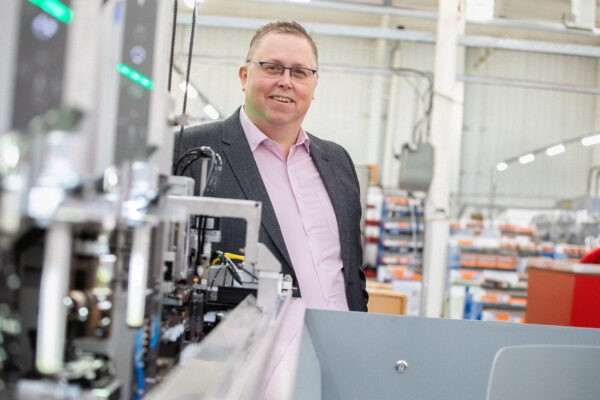
Artificial intelligence is no longer a distant concept for manufacturers. It is already being explored across quotation, production planning, engineering, quality, supply chain and customer service functions. Yet, for many organisations, the gap between experimentation and meaningful operational impact remains difficult to close.

A leading aquaculture specialist – that is changing the way fish are vaccinated safely – has signed a major manufacturing deal.

On paper, defined discipline-specific suppliers can look organised. However, every additional supplier introduces another handoff, and every handoff creates another point where time, quality, communication and accountability can be lost.


