


28th May 2020
Cabling can often be relegated to an afterthought for OEMs and machine builders looking to supply into the North American market. With the control panels built and the components selected, all under UL guidance, machine connectivity will bring the whole thing together but there’s a serious worry that all that hard work can be undone by not understanding the importance of cabling in relation to UL.
Getting cabling wrong can cause a number of unique electrical issues that are unlike any other in machine applications. There are often high demands on cable connectivity, so machine builders unlocking growth potential and thinking about expanding into the US market will want to steer clear of the operating malfunctions and early failures that often stall progress.
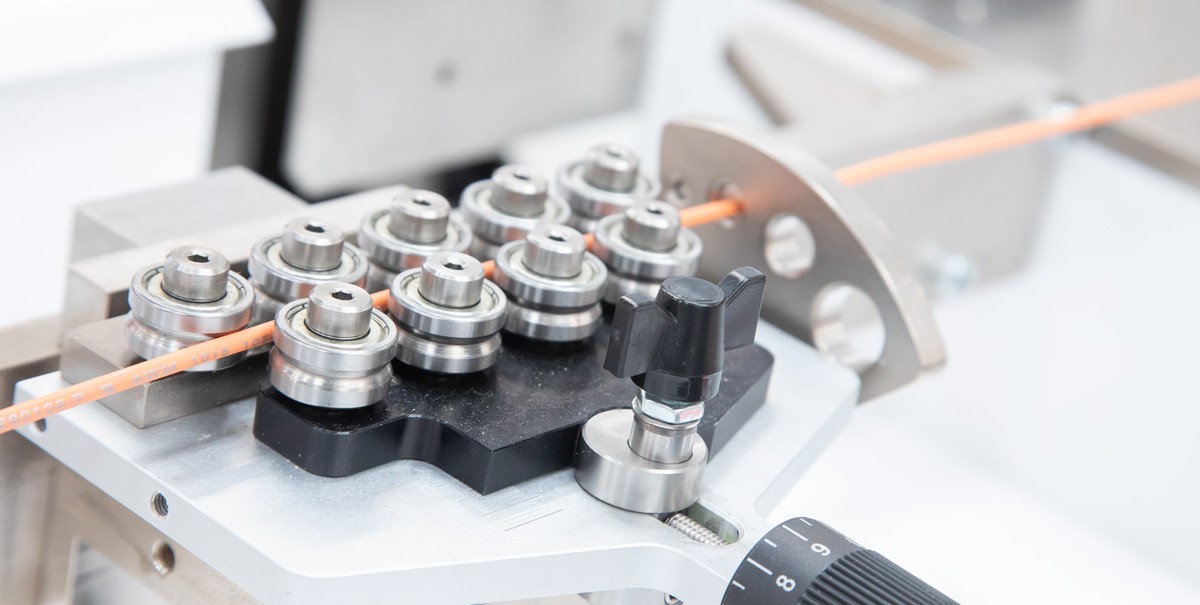
VFD (variable frequency drives) is one area of focus for machine builders and NFPA 79 outlines everything you may need to know to be fully compliant but it’s no walk in the park. As we have instigated throughout this UL standards blog series, the cost of getting UL wrong, no matter what stage of the build can be disastrous. Cabling is no different, so what considerations need to be understood and applied to make sure your machine is fit for North American markets?
When considering cable requirements for machines destined for the USA there are two standards that needs to be considered in the construction and installation of the machine: NEC 79 and NEC 80.
NEC 80 is the equivalent of the UK Wiring regulations covering electrical installations in all types of buildings. To conform with this standard any cables running within the building connecting to the machine should be UL listed and verified for the intended use. The markings below indicate listed cables.

NFPA 79 is the Electrical Standard for Industrial Machinery in the USA. NFPA 79 is the section of the National Electric Code (NEC®) that focuses on the electrical wiring standards used with industrial machinery. NFPA 79 applies to the electrical equipment used within a wide variety of machines, as well as groups of machines working together in a coordinated manner.
NFPA 79 is an extremely important industry-specific standards in North America and has special provisions addressing safe wiring practices for industrial machinery, such as machine tools. A common concern in automation applications is the use of Appliance Wiring Material (AWM) as opposed to using UL listed cables.
In order to use Appliance Wiring Material on industrial machinery and be compliant with NFPA 79, the cable must accommodate one of three provisions stated in article 12.9 of the NFPA 79 standard. It is important to note that it is sufficient to comply with just one of the three conditions instead of having to meet their requirements in combination. The conditions are as follows:
Appliance Wiring Material is regulated by UL 758 and carries the UL Recognised logo

Variable Frequency Drive applications can cause unique electrical issues that are unlike other standard power transmission in machine applications. There are higher demands on the cable connecting the motor to the drive. Standard multi-conductor cables rated for 500V will most likely not meet the requirements of VFD applications and can cause operating malfunctions and early failures. Cable is often an afterthought in the planning process but represents actually a very important component in the whole application.

The deployment of VFD (Variable Frequency Drives) products is increasing rapidly in the USA. The 3-phase voltage varies across the country, it is therefore important to select the correct cable for the application, particularly when running a long length of cable.
Let’s look at a specific example:

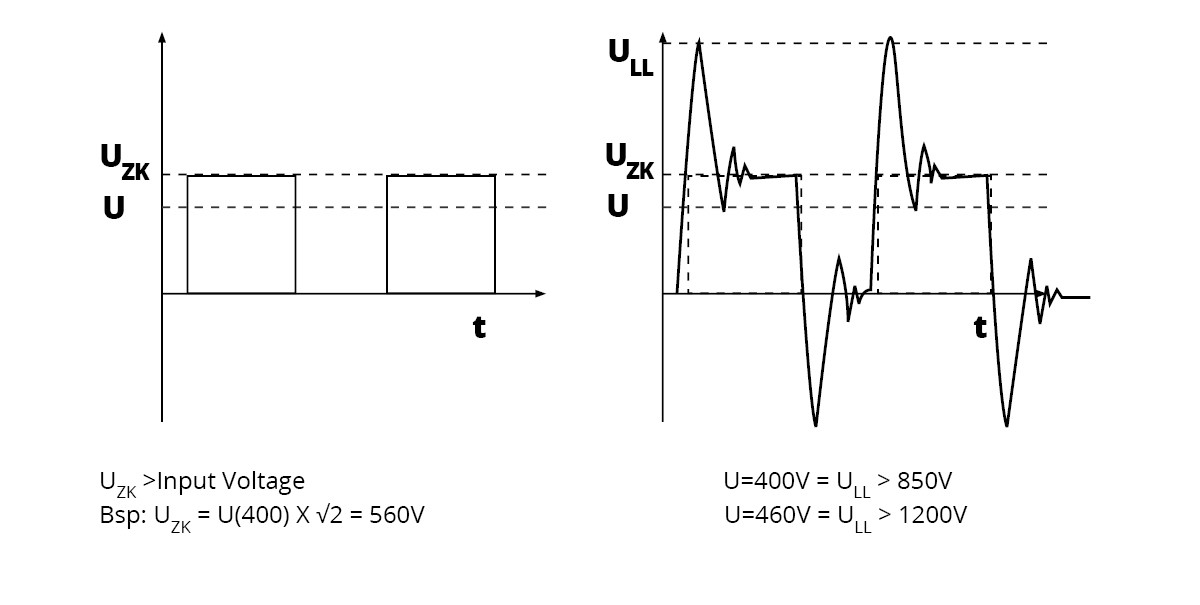
With an input of 400V, the drive would have an actual output of 560V DC. A 480V drive would have an output of 650V DC directly on the drive terminals. Diagram B shows the voltage that can be present after the power distortions are amplified through the cable. These reflected pulses can combine to raise the voltage on the cable as shown above. This effect is exaggerated by cable length. High voltage spikes can lead to insulation breakdown on the cable resulting in short circuits.
Conventional thermoplastic insulated cables (PVC) should not be used in VFD applications as they cannot withstand these voltages and have a higher capacitance between cores.
A typical VFD cable should have a 600/1000V rating which is standard for servo motor cables. The same rating should be considered for Invertor type applications particularly where the drive is located some distance from the motor.
Lutze have extensive experience in selecting cables for automation applications in the USA. We welcome involvement at the design phase to assist customers in meeting the correct standards and avoid the headaches often caused later in the build and component/wiring selection phases.
All Lutze AWM cables are designed for use in industrial environments and the AWM style and voltage rating is clearly marked on each cable jacket. However, for field installation it will still be safest to rely on cable that is UL Listed and verified for the intended use as required by the NEC.
Lutze offers many listed types, including MTW, TC-ER, PLTC and CM marks. Cables with these markings are considered listed types and are always permitted to be used in NFPA 79 compliant applications, as well as in applications per NEC.
The simplest way to get cabling right is to consult an expert like those employed at Lutze and its technical partners, some of which are involved in this blog series and can guide you under every facet of UL certification.
Come back next week when the blog series will be finalised by guest contributor Mark Lindsey of Product Approvals, also delivering a video from home detailing UL inspection and evaluation.
If you have a specific question about UL then the form below will be the most useful tool for you. With these questions, we can respond to your specific needs directly and also build on the communications planned throughout the campaign.
To be notified of any updates in the campaign, navigate to the sign-up form below.

Stefano Muraro of Rockwell Automation explores specific evolutions of UL508A standards and the impact on industrial control panels, highlighting innovative, sustainable solutions.

In this guest contribution to the ongoing Sustainability in UL Standards campaign, Phil Murby, UK Commercial Manager at Lutze explores a different approach to the construction of a control panel.

In this guest contribution to the ongoing Sustainability in UL Standards campaign, Phil Murby’s insights provide practical guidance on aligning control panel wiring practices with sustainability and compliance, offering tangible solutions for both efficiency and environmental stewardship.

As the manufacturing community increasingly leans towards sustainable practices, machine builders and OEMs find themselves at the centre of impact and progress. But there are several caveats to ‘doing the right thing’, that will almost certainly emerge. The implications for standards and certifications like UL508A for one, could be significant.

European machine builders are increasingly eyeing the lucrative North American market. Ian Knight believes accessing the opportunity depends on your firm’s ability to strategically navigate standards and avoid the pitfalls of safety compliance.

PP Control & Automation has long been promoting the considerations to be mindful of when navigating UL 508A. When doing so, questions linking to NFPA often enter the discussion. This supplement offers some clarity on the relationship between the two.

PP C&A has signed a deal with Product Approvals to boost its product certification offer to global clients.

Having an understanding of the processes encompassing inspection and evaluation is a major facet to the right UL practice for OEMs and the often overlooked considerations and risks when converting European builds to US-ready machines or when looking to expand into North America with new machine builds altogether.

With the control panels built and the components selected, all under UL guidance, machine connectivity will bring the whole thing together but there’s a serious worry that all that hard work can be undone by not understanding the importance of cabling in relation to UL.

Many definitions used in systems implemented in North America have no equivalent in the design of industrial installations according to European regulations. The reason for this is not a simple problem of different terminology, but a different conceptual approach altogether.
With these questions, we can respond to your specific needs directly and also build on the communications planned over the coming weeks.
One of the UK’s leading strategic manufacturing specialists is tapping into the UK’s unprecedented investment in upgrading the electricity grid.
As Britain accelerates investment in grid infrastructure, protection and control capacity could become a critical delivery constraint.

The appointment of a new Prime Minister inevitably brings renewed debate about the direction of the UK economy and what it could mean for business.

Ian Knight, Chief Information Officer at PP Control & Automation (PP C&A) challenges the prevailing, often vague narrative around AI adoption and reframes the conversation around a more practical starting point: operational constraints.
Artificial intelligence is no longer a distant concept for manufacturers. It is already being explored across quotation, production planning, engineering, quality, supply chain and customer service functions. Yet, for many organisations, the gap between experimentation and meaningful operational impact remains difficult to close.

A leading aquaculture specialist – that is changing the way fish are vaccinated safely – has signed a major manufacturing deal.

On paper, defined discipline-specific suppliers can look organised. However, every additional supplier introduces another handoff, and every handoff creates another point where time, quality, communication and accountability can be lost.

Very rarely does growth not surface because an OEM lacks ambition. Shortcomings arise because operating models built to support such ambition don’t evolve quickly enough.


