


20th March 2023
Do you wish the government would just stop the ongoing tinkering to tax changes?
CEO, Tony Hague contributed to this piece in The Times, also published in the Sunday issue on March 19 2023, and it seems the consensus between all contributing business leaders is that it won’t inspire business to invest in Britain, and it especially won’t change long-term investment plans…
Requires subscription or free trial to read



PP Control & Automation has set its sights on breaking the £40m sales revenue barrier in 2024 after having seen sales rise from £24m to £36m over the last twelve months.

The third in a series of six programmes from UK Manufacturing TV looks at the challenge facing SME manufacturers to recruit the skills they need, now and in the future.

Three PP Control & Automation directors roll back the years and document the impact different investments over three decades have made on the business.

PP Control & Automation joined and hosted the WMG, University of Warwick Net Zero Innovation Network Cohort this month as it looks to further boost its green credentials.

PP Control & Automation has completed the installation of 450 sq metres of solar panels on the roof of its world-class facility in Cheslyn Hay.

PP C&A has signalled its intentions to ramp up investment in its recently launched Bright Sparks University (BSU).

PP C&A has invested over £100,000 into creating a new Electrostatic Discharge manufacturing facility.

A world first in ‘crimping’ technology has been installed PP C&A to help with increased demand for its strategic services.

A new £1m factory extension has been unveiled by PP Control & Automation as it singled its intention to double sales by 2021.

One of the UK’s leading strategic manufacturing specialists is tapping into the UK’s unprecedented investment in upgrading the electricity grid.
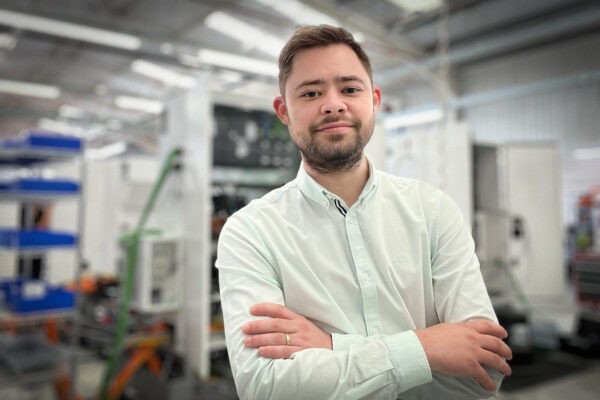
As Britain accelerates investment in grid infrastructure, protection and control capacity could become a critical delivery constraint.

The appointment of a new Prime Minister inevitably brings renewed debate about the direction of the UK economy and what it could mean for business.

Ian Knight, Chief Information Officer at PP Control & Automation (PP C&A) challenges the prevailing, often vague narrative around AI adoption and reframes the conversation around a more practical starting point: operational constraints.
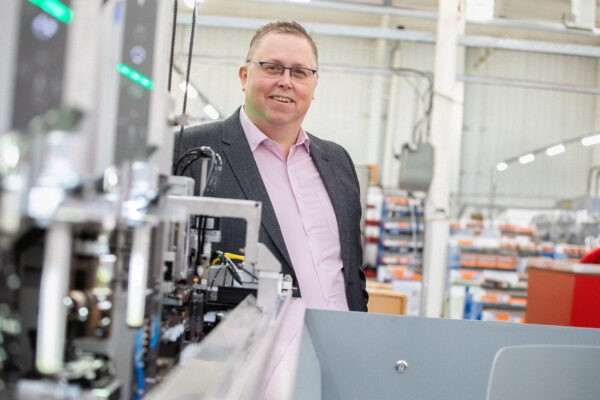
Artificial intelligence is no longer a distant concept for manufacturers. It is already being explored across quotation, production planning, engineering, quality, supply chain and customer service functions. Yet, for many organisations, the gap between experimentation and meaningful operational impact remains difficult to close.

A leading aquaculture specialist – that is changing the way fish are vaccinated safely – has signed a major manufacturing deal.

On paper, defined discipline-specific suppliers can look organised. However, every additional supplier introduces another handoff, and every handoff creates another point where time, quality, communication and accountability can be lost.

Very rarely does growth not surface because an OEM lacks ambition. Shortcomings arise because operating models built to support such ambition don’t evolve quickly enough.


