


27th June 2024
PP Control & Automation CFO, David Ferriday adds commentary to a piece in Raconteur, frustrated by the lack of business support in any of the major party manifestos.
With the UK’s general election imminent, major political parties have revealed their policies. Financial stakeholders are keenly observing, given the potential impacts on taxation, regulation, pensions, and trade.
Labour’s 133-page manifesto prioritises economic growth, proposing a corporation tax cap at 25%, enhanced R&D, and a National Wealth Fund for green projects. They aim to tackle tax avoidance, maintain capital investment incentives, and establish a roadmap for business taxation. Labour also focuses on innovation, green finance, regulatory updates, wage reforms, and improved international trade relations without rejoining the EU.
The Conservatives, contrastingly, emphasise tax cuts, including abolishing the main National Insurance rate for the self-employed and reducing rates for other employees. Their manifesto includes support for SMEs, local investment, and reduced regulatory burdens, aiming to save businesses £1bn in administrative costs by reforming EU-inherited laws. They maintain a commitment to net-zero emissions by 2050 with pragmatic measures.
Other parties like the Liberal Democrats, Greens, and Reform UK also present distinct financial and regulatory strategies, focusing on green investments, financial inclusion, and a low-tax economy, respectively. Key finance-related pledges highlight varying approaches to tax, investment, regulatory environments, wages, pensions, and international trade across the political spectrum.
Read the full and informative feature article with commentary from David on the Raconteur.
“Frustratingly, there is very little to help business in any of the major party manifestos.
“Companies, especially SMEs, have gone through significantly challenging times since the announcement and subsequent implementation of Brexit in 2016 – a systemic shock that was followed up by the pandemic, global supply chain issues, skyrocketing energy prices and two global conflicts.
“Exporting to and importing from the EU is now more difficult and there is no sign of improvement. Corporation taxes have risen and the UK is no longer as attractive to overseas investors as we once were, especially now that we are sitting outside of the EU market.”
David Ferriday, CFO

One of the UK’s leading strategic manufacturing specialists is tapping into the UK’s unprecedented investment in upgrading the electricity grid.

As Britain accelerates investment in grid infrastructure, protection and control capacity could become a critical delivery constraint.

The appointment of a new Prime Minister inevitably brings renewed debate about the direction of the UK economy and what it could mean for business.

Ian Knight, Chief Information Officer at PP Control & Automation (PP C&A) challenges the prevailing, often vague narrative around AI adoption and reframes the conversation around a more practical starting point: operational constraints.
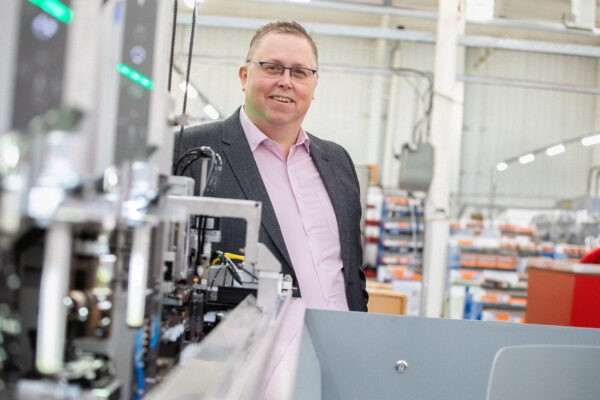
Artificial intelligence is no longer a distant concept for manufacturers. It is already being explored across quotation, production planning, engineering, quality, supply chain and customer service functions. Yet, for many organisations, the gap between experimentation and meaningful operational impact remains difficult to close.

A leading aquaculture specialist – that is changing the way fish are vaccinated safely – has signed a major manufacturing deal.

On paper, defined discipline-specific suppliers can look organised. However, every additional supplier introduces another handoff, and every handoff creates another point where time, quality, communication and accountability can be lost.

Very rarely does growth not surface because an OEM lacks ambition. Shortcomings arise because operating models built to support such ambition don’t evolve quickly enough.


