


12th January 2023
It is a well-documented fact that the single biggest contributor to machine downtime and field failure is caused by poor electrical connectivity.
Just one poor crimp connection can cause machine failure, and the sheer volume of electrical connections in and around a piece of complex machinery could make this particularly challenging.
In order to avoid the damaging costs associated with this failure, you will want assurances from your outsourcing partner or control panel builder that they recognise the importance of repeatable quality within their manufacturing processes.
It will need significant investment in automation for both cable manufacture and cable testing, the development initiatives to engage the best people and train the necessary skills, and investment in the facility and processes that will ensure the most effective connectivity possible.
Data sources: Senseye ‘True Cost of Downtime 2022‘ Report and publications such as Forbes referencing this and other industrial data.
These figures come from extrapolating the results of a survey by Senseye in 2021-22, asking large manufacturing and industrial businesses about unplanned downtime and its costs, as well as about how they collect data, and their use of condition-based maintenance and Predictive Maintenance.
In every sector surveyed, an hour’s downtime now costs a firm at least 50% more than it did two years ago. Pent-up post-lockdown demand, global microchip shortages, and inflation are key factors.
The costs to firms reflect the following: Loss of revenue (the loss of goods that would have been produced for sale in that period) • The cost of wages (paying staff who can’t work) • The cost of wages of those involved in rectifying the problem • The cost of emergency spare parts • Any penalties incurred, such as contractual compensation.
That downtime accumulated over a single year comes at an eye-watering cost. For example, the average automotive manufacturer loses over £18,000 per minute when the production line stops. That quickly adds up.
Shutdowns, scheduled or not, can eat up to 1%-10% of available production time. Some report as much as 20%.
If the average large manufacturing plant wasn’t hit hard enough, every year, Fortune Global 500 (FG500) manufacturing and industrial organisations lose approximately 3.3 million hours of production time to machine failure, and almost £800m through unplanned downtime.
Every sector carries a different downtime cost per hour, significantly impacting overall downtime cost in a single year, but all are staggering numbers.
Automated Test Equipment (ATE) is a term you may be familiar with. It uses automation to measure and evaluate connectivity for a given cable harness quickly and precisely. Such a process not only looks at ‘point to point’ accuracy of a harness, but it can also perform other checks in relation to its construction, such as high or low resistances, and as well as carrying out other tests such as Hi-Potential tests which check the adequacy of electrical insulation.
By testing cables in this way, you minimise the opportunity for manufacturing errors not being identified and rectified before that cable harness gets integrated into a larger, more complex control system and the associated machinery. Faults can then develop later down the line, often once the machine is installed and commissioned (due to environmental conditions as well as vibration). At this point, identifying the issue can be extremely difficult and time consuming, leading to unnecessary and costly down time, particularly with intermittent issues.
An area of significant investment is in the automated production and ‘in process’ test (CFM – Crimp Force Monitoring) for single core cable production, which utilises a 100% checking regime of all crimps being applied, ensuring strip back lengths, crimp position and applied crimp force are all in line with the required specifications.
In 2019, PP C&A installed a world first in crimping technology – An Artos CRX33-GVM, modified for its exact production requirements. It provides shorter handling distances and can process cables at over 5 metres per second, whilst still maintaining very high levels of accuracy. Every single core cable goes through automated cable prep, automatic cutting, crimping, and identing with direct ink jet printing.


The design and build quality of any cable harness cannot be overstated when considering most failure in any electrical system is inferior quality of connectivity. By automating both the production and test of single and multi-core cables, PP C&A can minimise risk for both its customers and the end users.
In addition to automated cable preparation and ATE testing, other processes can be adopted to ensure performance and reliability of a given system. PP C&A has designed bespoke functional test rigs for many of its customers, to fully simulate the desired operating requirements of a given control system, which often includes software to check all inputs and outputs are correctly connected and all signals are being seen and read.

inc. ARTOS, Schleuniger, and Z+F


inc. CIRRUS
PP Control & Automation has set its sights on breaking the £40m sales revenue barrier in 2024 after having seen sales rise from £24m to £36m over the last twelve months.

The third in a series of six programmes from UK Manufacturing TV looks at the challenge facing SME manufacturers to recruit the skills they need, now and in the future.

Three PP Control & Automation directors roll back the years and document the impact different investments over three decades have made on the business.

PP Control & Automation joined and hosted the WMG, University of Warwick Net Zero Innovation Network Cohort this month as it looks to further boost its green credentials.

PP Control & Automation has completed the installation of 450 sq metres of solar panels on the roof of its world-class facility in Cheslyn Hay.

PP C&A has signalled its intentions to ramp up investment in its recently launched Bright Sparks University (BSU).

PP C&A has invested over £100,000 into creating a new Electrostatic Discharge manufacturing facility.

A world first in ‘crimping’ technology has been installed PP C&A to help with increased demand for its strategic services.

A new £1m factory extension has been unveiled by PP Control & Automation as it singled its intention to double sales by 2021.

Safe to say, that with the current disruptive economic reality looming over manufacturers and the sheer number of new challenges to navigate, machine downtime, one that is by no means new, is something they can ill afford to allow continue.
There are several ways to mitigate the risk and one that PP C&A has actively championed and continues to invest in is quality of connectivity. If one poor crimp can bring a machine to its knees, then no poor crimps is the only solution.
Investment in automation and developing the skills required to keep pace are key in ensuring reliability. Reliability is the underlining principle for machine builders searching for ways to engage outsourcing partners after all. They’re looking for reliable connectivity, reliable performance, reliable people.


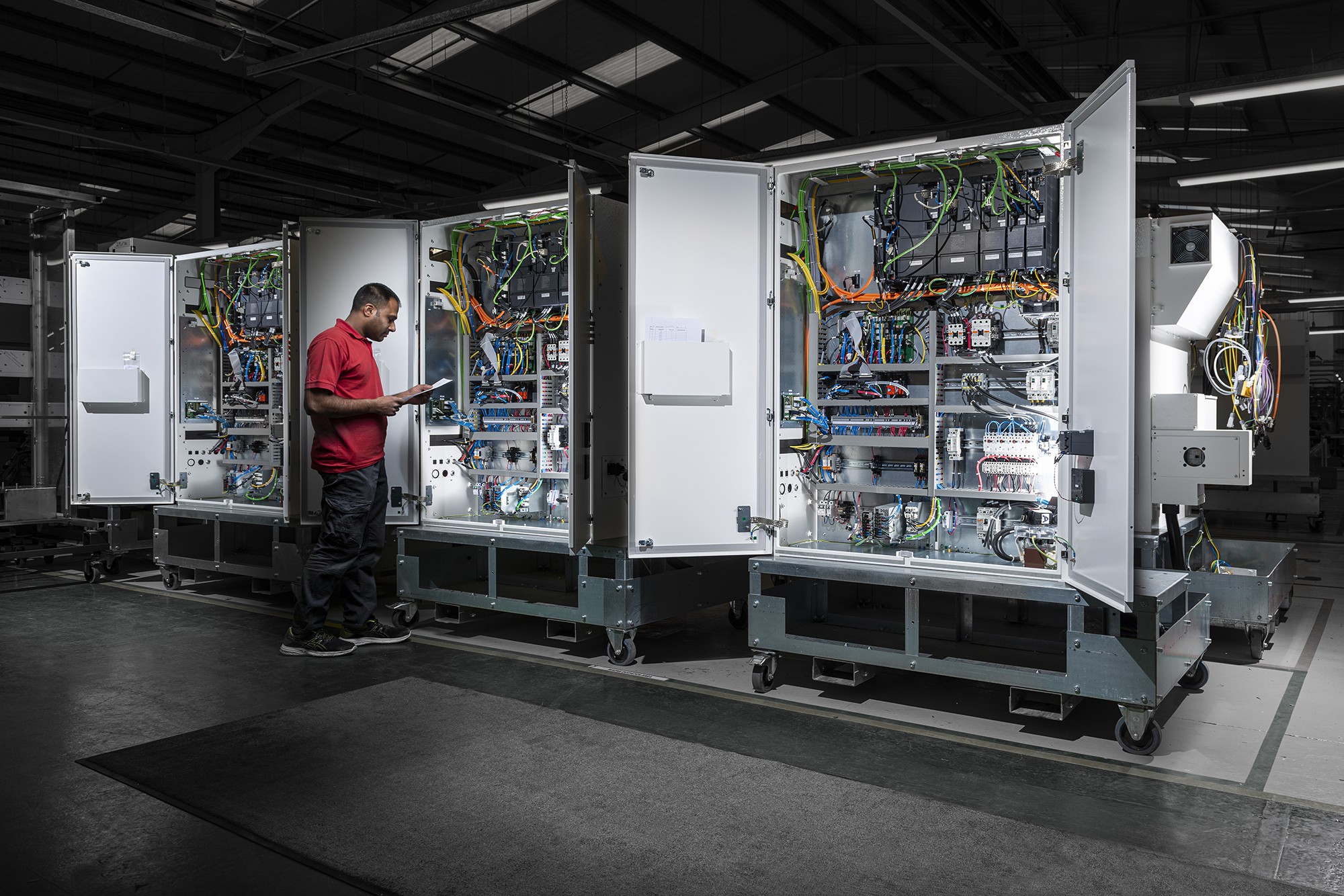
A £250,000 investment in Artos crimping technology for example, is a commitment to automation that underlines the importance it plays in making PP C&A’s own manufacturing processes as productive as possible. It is one way to help deliver an altogether more robust interconnectivity solution for complex machinery.
Machine downtime due to poor connectivity can cause significant financial losses for manufacturers. To manage this threat better, manufacturers can take several steps alongside engaging a strategic outsourcing partner with the necessary automation, skills, and processes to improve downtime. Steps such as, implementing a robust network infrastructure and monitoring network performance to detect and resolve issues quickly.
Manufacturers in practically every vertical should also be increasing their own investment in automation which will help minimise machine downtime. Automation technologies such as robotic process automation (RPA) and machine learning (ML) can be used to improve the efficiency and reliability of machines, thereby reducing the likelihood of downtime. For example, automating repetitive tasks, freeing up staff to focus on more critical tasks and reducing the chance of human error will limit production hours lost.
By investing in automation, manufacturers can also improve the overall productivity and quality of their operations, which can lead to increased revenue and market competitiveness. But whatever measures machine builders take to improve downtime, repeatable and reliable quality when it comes to connectivity should be priority number one.
One of the UK’s leading strategic manufacturing specialists is tapping into the UK’s unprecedented investment in upgrading the electricity grid.

As Britain accelerates investment in grid infrastructure, protection and control capacity could become a critical delivery constraint.

The appointment of a new Prime Minister inevitably brings renewed debate about the direction of the UK economy and what it could mean for business.

Ian Knight, Chief Information Officer at PP Control & Automation (PP C&A) challenges the prevailing, often vague narrative around AI adoption and reframes the conversation around a more practical starting point: operational constraints.
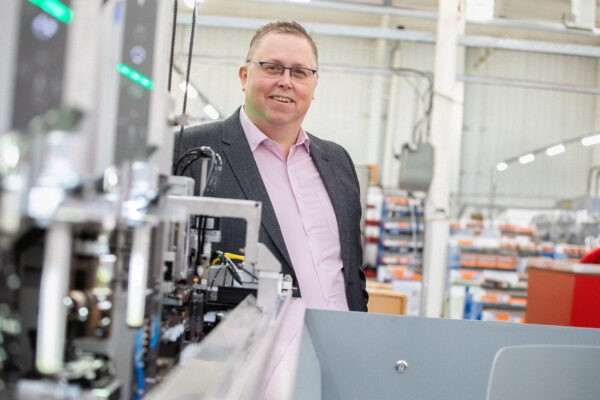
Artificial intelligence is no longer a distant concept for manufacturers. It is already being explored across quotation, production planning, engineering, quality, supply chain and customer service functions. Yet, for many organisations, the gap between experimentation and meaningful operational impact remains difficult to close.

A leading aquaculture specialist – that is changing the way fish are vaccinated safely – has signed a major manufacturing deal.

On paper, defined discipline-specific suppliers can look organised. However, every additional supplier introduces another handoff, and every handoff creates another point where time, quality, communication and accountability can be lost.

Very rarely does growth not surface because an OEM lacks ambition. Shortcomings arise because operating models built to support such ambition don’t evolve quickly enough.


