


29th July 2022
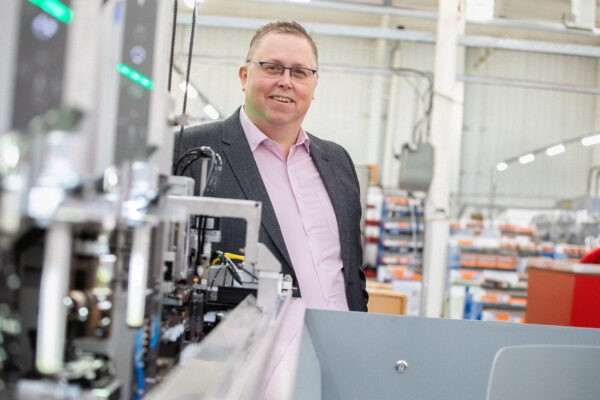
CEO, Tony Hague contributes to a positive conversation with Reuters on reshoring.
BIRMINGHAM, England, July 28 – In central England, birthplace of the industrial revolution, factories are buzzing anew, hammering out parts for cars, planes and medical machines that used to be made in Asia.
After two years of global supply-chain disruption, and with dark clouds on the horizon, manufacturers around Britain’s second city of Birmingham say they are inundated with orders, helped by new and old domestic clients bringing some production back home.
“If you invest in your people, invest in training, invest in automation, invest in robotics, do all the right things, basically as a UK manufacturer, you can be competitive.”
Tony Hague


One of the UK’s leading strategic manufacturing specialists is tapping into the UK’s unprecedented investment in upgrading the electricity grid.

As Britain accelerates investment in grid infrastructure, protection and control capacity could become a critical delivery constraint.

The appointment of a new Prime Minister inevitably brings renewed debate about the direction of the UK economy and what it could mean for business.

Ian Knight, Chief Information Officer at PP Control & Automation (PP C&A) challenges the prevailing, often vague narrative around AI adoption and reframes the conversation around a more practical starting point: operational constraints.
Artificial intelligence is no longer a distant concept for manufacturers. It is already being explored across quotation, production planning, engineering, quality, supply chain and customer service functions. Yet, for many organisations, the gap between experimentation and meaningful operational impact remains difficult to close.

A leading aquaculture specialist – that is changing the way fish are vaccinated safely – has signed a major manufacturing deal.

On paper, defined discipline-specific suppliers can look organised. However, every additional supplier introduces another handoff, and every handoff creates another point where time, quality, communication and accountability can be lost.

Very rarely does growth not surface because an OEM lacks ambition. Shortcomings arise because operating models built to support such ambition don’t evolve quickly enough.


