


14th May 2019
PP Control & Automation’s evolution into one of the world’s leading providers of strategic outsourcing solutions to 25 original equipment manufacturers was recognised at a prestigious ceremony last night in Birmingham.
Held by Insider Media, the Made in the Midlands Awards came to a glittering finale in front of 250 people and the Cheslyn-Hay-based company was Highly Commended in the Manufacturer of the Year (under £25m) category.

Judges, featuring Coventry University’s Carl Perrin and automotive expert Rachel Eade, noted the company’s £3m increase in sales and the way it has developed its global customer base by offering clients access to an outsourcing service that delivers increased capacity, reduced lead times and greater flexibility.
PP C&A was also praised for its investment in an automated in-house logistics facility to improve productivity and its STEM engagement, with more than 10 different schools and over 250 pupils taking part in activities.
“It’s always great to get recognition and the Made in the Midlands Awards is one of the most prestigious on the manufacturing calendar,” explained Sean Caley, Chief Operating Officer at PP Control & Automation.
“We’ve been on a steep growth curve over the last five years and 2018 saw us secure some notable ‘wins’ both in the UK and overseas.”
He concluded: “Our approach to strategic outsourcing is very much in demand and the work we do at PP allows our customers to deliver higher quality milk, F1 cars to drive faster and mobile phones to survive in water!”
Control & Automation | Contract Manufacturing | Strategic Outsourcing
Please complete the form below and our team will be in touch.
One of the UK’s leading strategic manufacturing specialists is tapping into the UK’s unprecedented investment in upgrading the electricity grid.
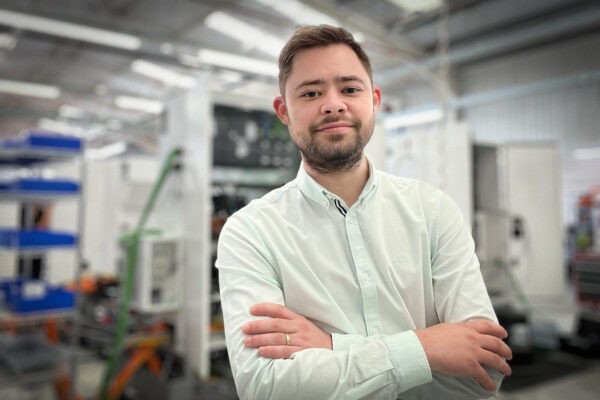
As Britain accelerates investment in grid infrastructure, protection and control capacity could become a critical delivery constraint.

The appointment of a new Prime Minister inevitably brings renewed debate about the direction of the UK economy and what it could mean for business.

Ian Knight, Chief Information Officer at PP Control & Automation (PP C&A) challenges the prevailing, often vague narrative around AI adoption and reframes the conversation around a more practical starting point: operational constraints.
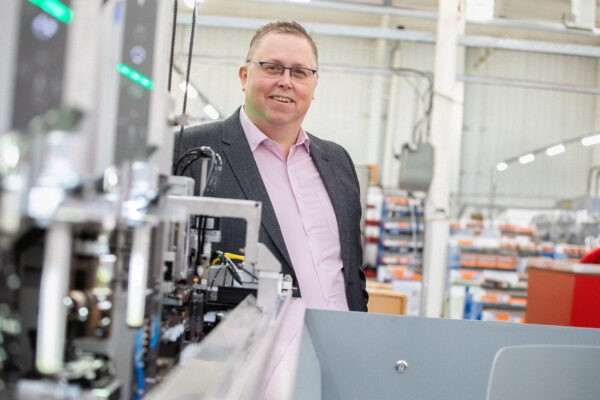
Artificial intelligence is no longer a distant concept for manufacturers. It is already being explored across quotation, production planning, engineering, quality, supply chain and customer service functions. Yet, for many organisations, the gap between experimentation and meaningful operational impact remains difficult to close.

A leading aquaculture specialist – that is changing the way fish are vaccinated safely – has signed a major manufacturing deal.

On paper, defined discipline-specific suppliers can look organised. However, every additional supplier introduces another handoff, and every handoff creates another point where time, quality, communication and accountability can be lost.

Very rarely does growth not surface because an OEM lacks ambition. Shortcomings arise because operating models built to support such ambition don’t evolve quickly enough.


