


26th June 2017
When Britons voted to leave the European Union a year ago, the managing director of PP Control & Automation, which makes electrical-control systems, was devastated.
The feeling didn’t last long. The company broke ground mere weeks after the vote on a project to increase its production space in the West Midlands. It’s part of a plan to double sales over the next four years and push into more markets.
“I’ve been amazed so far by the reaction and the resilience, the grit and determination,” said Tony Hague, PP’s managing director. “When our back’s against the wall, it’s like the British bulldog spirit suddenly appears. And long may it continue, because I think we’re going to need it over the next few years.”
One of the UK’s leading strategic manufacturing specialists is tapping into the UK’s unprecedented investment in upgrading the electricity grid.

As Britain accelerates investment in grid infrastructure, protection and control capacity could become a critical delivery constraint.

The appointment of a new Prime Minister inevitably brings renewed debate about the direction of the UK economy and what it could mean for business.

Ian Knight, Chief Information Officer at PP Control & Automation (PP C&A) challenges the prevailing, often vague narrative around AI adoption and reframes the conversation around a more practical starting point: operational constraints.
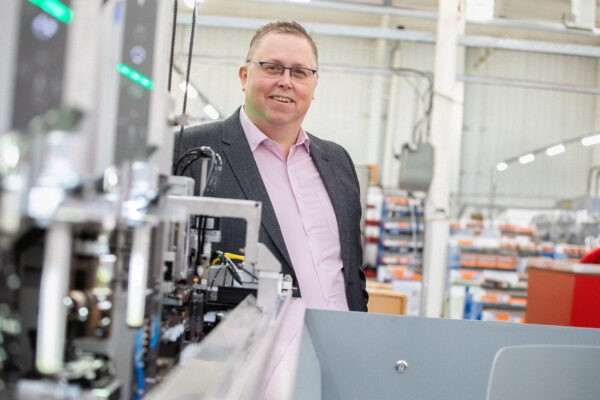
Artificial intelligence is no longer a distant concept for manufacturers. It is already being explored across quotation, production planning, engineering, quality, supply chain and customer service functions. Yet, for many organisations, the gap between experimentation and meaningful operational impact remains difficult to close.

A leading aquaculture specialist – that is changing the way fish are vaccinated safely – has signed a major manufacturing deal.

On paper, defined discipline-specific suppliers can look organised. However, every additional supplier introduces another handoff, and every handoff creates another point where time, quality, communication and accountability can be lost.

Very rarely does growth not surface because an OEM lacks ambition. Shortcomings arise because operating models built to support such ambition don’t evolve quickly enough.


