


18th May 2026
For many machine builders and OEMs, supplier complexity has become an accepted part of doing business.
A control panel comes from one supplier. Cable harnesses from another. Pneumatics, hydraulics or fluid systems may sit somewhere else. Electronics, box build, mechanical assemblies, enclosures, brackets, sub-assemblies and final integration can all move through different routes before they arrive at the point of need.
On paper, this can look organised because each supplier has a defined role and each purchase order has a specific scope. However, every additional supplier introduces another handoff, and every handoff creates another point where time, quality, communication and accountability can be lost.
That is where the assembly advantage becomes increasingly important.
For OEMs looking to improve delivery performance, protect internal capacity and reduce operational friction, they’ll be asking whether the wider manufacturing model is helping the business move faster, with fewer delays, fewer interfaces and fewer avoidable complications.
Integrated assembly is about simplifying the route from design intent to finished, production-ready output.


Handoffs are one of the most underestimated sources of friction in manufacturing.
A handoff might happen between suppliers. It might happen between procurement and engineering. It might happen between a component supplier and the OEM’s internal production team. It might happen when an assembly arrives incomplete, when documentation does not match the build, or when a late design change needs to be interpreted by multiple parties.
Each handoff may seem manageable in isolation. But across a complex machine or system, the cumulative effect can be significant.
And more suppliers often means:
more communication loops
more purchase orders
more expediting
more quality checks
more incoming inspection
more dependency on internal teams to coordinate
For machine builders, this can create a familiar pattern. The business is busy, but progress feels harder than it should. It is not unusual in these circumstances to find engineers spending time resolving supplier queries, procurement teams chasing updates, and production teams wait for missing items. It means that project managers absorb delays, and customer delivery dates come under pressure.
Ultimately, it is often a lack of integration.
Traditional outsourcing often focuses on individual work packages. A supplier is asked to build a control panel, produce a harness, assemble a box build or manufacture a specific sub-system. That approach can work well when the scope is narrow and the interfaces are simple.
But as machines become more complex, and as OEMs face greater pressure around speed, quality, compliance and responsiveness, the value shifts.
The real advantage comes when a manufacturing partner can bring multiple related capabilities together. Control panels. Electrical assemblies. Mechanical assembly. Cable harnesses. Pneumatics. Hydraulics. Fluid control systems. Electronics. Box build. Testing. Documentation. Supply chain coordination.
This creates a more integrated assembly model, where the partner is not just completing a task, but taking responsibility for a broader section of the manufacturing process.
Instead of the OEM coordinating several suppliers and managing the gaps between them, more of the work can be consolidated through one capable partner. That reduces the number of interfaces, improves accountability and creates a clearer path from requirement to delivery.

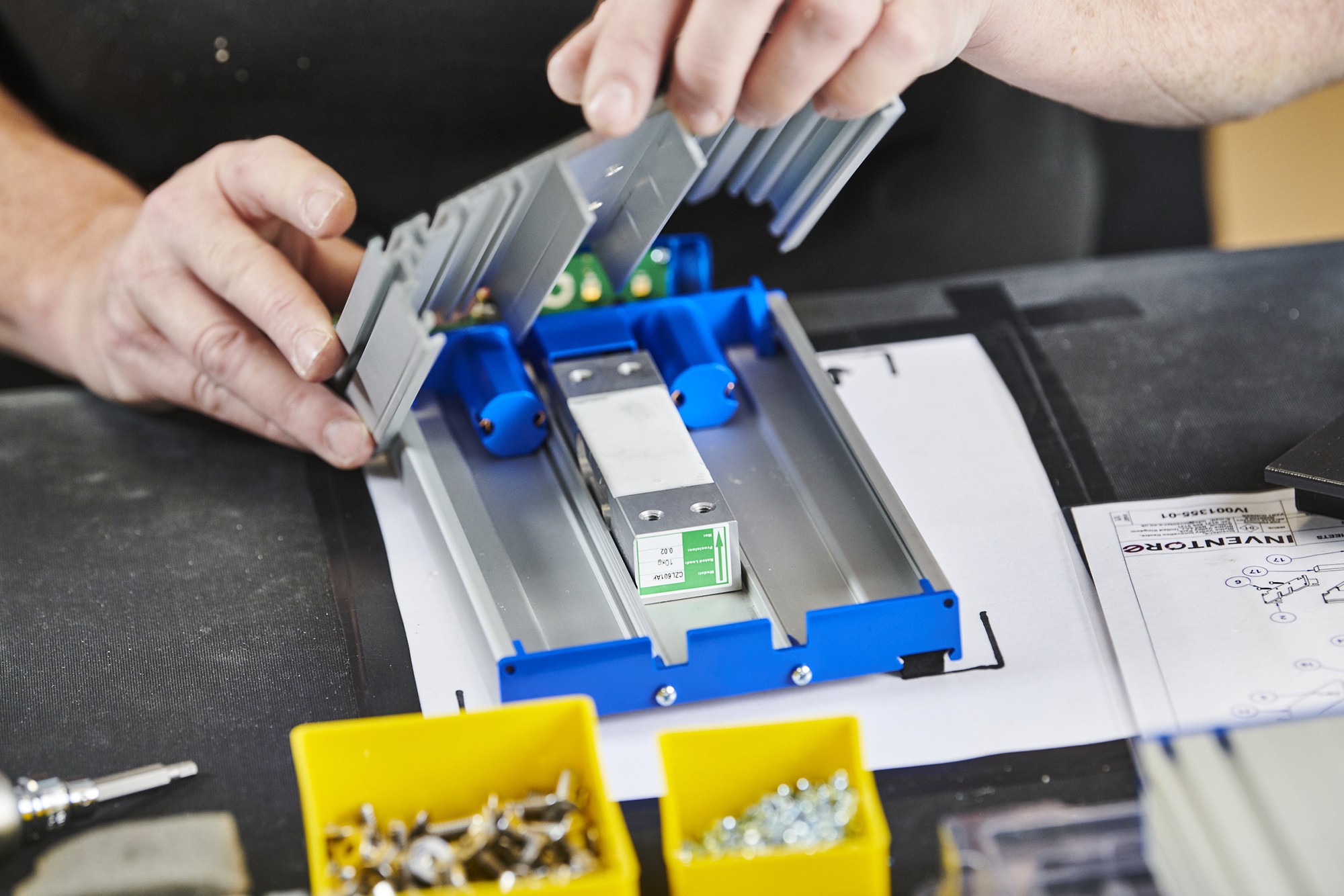


Delays in manufacturing build through small points of friction: a missing fitting, drawing query, delayed harness, a control panel waiting for mechanical integration… You understand the kind of build-up and its ultimate cost.
These issues consume time because they require coordination. Someone inside the OEM has to investigate, clarify, chase, replan or escalate. Integrated assembly helps reduce this burden by removing many of the boundaries where those issues occur.
When related work packages sit with one partner, there is greater opportunity to plan the build sequence properly, identify issues earlier, coordinate materials, align documentation and test assemblies before they reach the customer’s production environment.
It also improves responsiveness. If a change is required, it can often be managed across the assembly as a whole rather than passed between disconnected suppliers. That does not remove the need for disciplined change control, but it does make the process more coherent.
For OEMs dealing with customer pressure, engineering changes or fluctuating demand, that coherence can be the difference between controlled adaptation and operational disruption.

One of the strongest arguments for integrated assembly is the capacity it gives back to internal teams.
Many OEMs underestimate how much time their people spend managing supplier complexity. It is not always visible as a line item, but it is felt every day, and this is not where high-value internal expertise should be focused.
For machine builders, engineering time should be directed towards product development, customer requirements, innovation, problem solving and continuous improvement. Operations should be focused on flow, delivery and performance. Procurement should be building resilient, strategic supply relationships rather than constantly managing avoidable friction.
By consolidating more assembly activity through a capable partner, OEMs can reduce the coordination burden placed on these teams.
That does not mean losing control. In fact, done well, it can create more control because responsibilities become clearer, communication becomes simpler and performance is easier to manage.
The goal is not to step away from the manufacturing process. It is to remove unnecessary friction from it.
Supplier consolidation can be attractive, but it also creates understandable concern.
OEMs do not want fewer suppliers if that means weaker expertise. They do not want simplicity at the expense of technical depth. They do not want a generalist partner attempting to manage specialist work without the right capability, systems or experience.
That is why the assembly advantage depends on genuine integrated capability.
For PP Control & Automation (PP C&A), this is where the broader proposition becomes important. The business is known for electrical control and automation, but its value extends beyond control panels alone. Supporting machine builders and OEMs across electrical, electronic, mechanical and fluid-based assemblies creates an opportunity to reduce supplier complexity whilst maintaining specialist focus.
This is especially relevant where different assembly elements interact. A control panel does not exist in isolation. It connects to wiring, sensors, actuators, pneumatic or hydraulic systems, enclosures, operator interfaces, mechanical structures and wider machine architecture.
When these elements are better understood together, the manufacturing process becomes more joined up. The customer benefits from fewer handoffs, but also from a partner with a broader appreciation of how the assembly contributes to the final machine or system.
The assembly advantage also encourages a shift in mindset.
Many supply chains are still organised around components and individual categories. That can make sense from a purchasing perspective, but it does not always reflect how value is created in manufacturing.
Customers do not experience the machine as a set of disconnected parts. They experience performance, reliability, delivery, quality and confidence.
To achieve that, OEMs need supply partners who understand more than their own isolated scope. They need partners who can think in terms of assemblies, interfaces, build flow and operational outcomes.
This is why PP C&A is deliberate when it positions its outsourcing model as ‘strategic’. It allows OEMs to ask better questions, such as:
Where are we creating unnecessary handoffs?
Where are internal teams spending too much time coordinating suppliers?
Which assemblies could be grouped more intelligently?
Where could a partner take greater responsibility for repeatable, production-ready output?
How could supplier consolidation improve delivery without increasing risk?
These questions move the discussion away from simple outsourcing and towards operating model design.
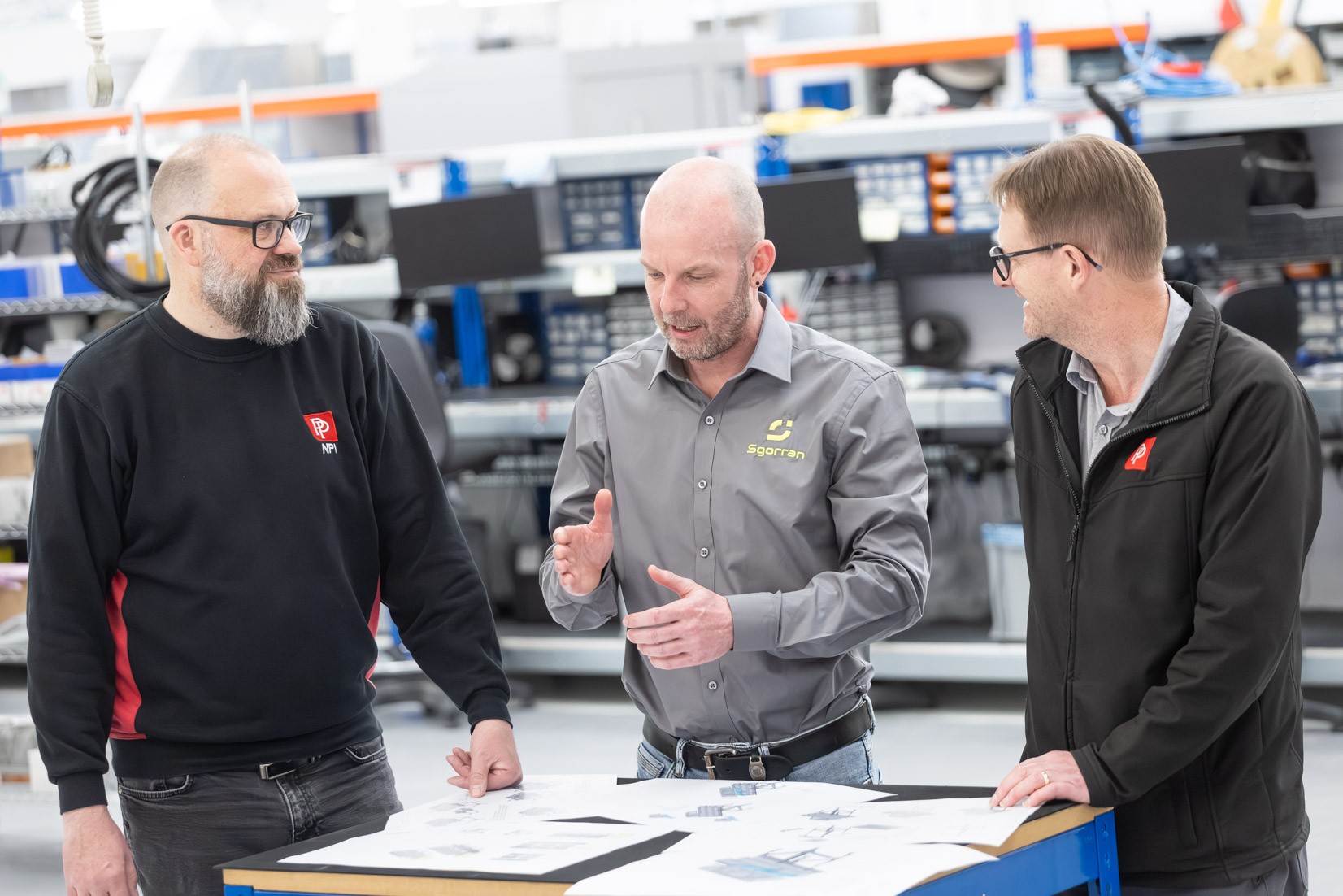
Growth places pressure on every weak point in a manufacturing system. A supplier arrangement that works at one volume may struggle at another. A process that depends on informal coordination may become unreliable as complexity increases. A production model that relies heavily on internal teams to manage every supplier interface may become a constraint on scale.
Integrated assembly helps OEMs build a more scalable model. It can simplify supply chain architecture, improve accountability, reduce internal workload and create more reliable routes to production. It gives machine builders the ability to protect core capability and partner in areas that create drag, demand specialist resource or limit flexibility.
Most importantly, it supports growth without simply adding more complexity.
By bringing together control panels, electrical assemblies, mechanical assembly, pneumatics, hydraulics, fluid control, electronics, harnesses and box build capability, PP Control & Automation helps machine builders and OEMs reduce the complexity that often sits behind production pressure.
Because the fewer times work has to be passed, chased, clarified and corrected, the more confidently it can move.
That is the assembly advantage: fewer handoffs, less friction and a stronger route from requirement to delivery.
One of the UK’s leading strategic manufacturing specialists is tapping into the UK’s unprecedented investment in upgrading the electricity grid.
As Britain accelerates investment in grid infrastructure, protection and control capacity could become a critical delivery constraint.

The appointment of a new Prime Minister inevitably brings renewed debate about the direction of the UK economy and what it could mean for business.

Ian Knight, Chief Information Officer at PP Control & Automation (PP C&A) challenges the prevailing, often vague narrative around AI adoption and reframes the conversation around a more practical starting point: operational constraints.
Artificial intelligence is no longer a distant concept for manufacturers. It is already being explored across quotation, production planning, engineering, quality, supply chain and customer service functions. Yet, for many organisations, the gap between experimentation and meaningful operational impact remains difficult to close.

A leading aquaculture specialist – that is changing the way fish are vaccinated safely – has signed a major manufacturing deal.

Very rarely does growth not surface because an OEM lacks ambition. Shortcomings arise because operating models built to support such ambition don’t evolve quickly enough.

Recent weeks have brought two important industry moments into sharp focus, concluding that demand for AI and automation is rising, but investment, skills, and long-term thinking must follow.


