


23rd March 2026
Our ideas. Now in audio.
This series turns our latest opinion pieces into easy-to-access insights, exploring the real-world challenges facing machine builders and OEMs today. Simple. Practical. On demand.
For decades, one question has sat at the heart of operational strategy for machine builders and OEMs: make or buy?
It’s a familiar debate. Build in-house to retain control, knowledge, and flexibility. Or outsource to reduce total cost of ownership, access expertise, and scale more easily. Increasingly, this binary framing feels outdated. It isn’t the wrong question by any means, but perhaps it is an incomplete one.
In today’s environment, the real challenge isn’t choosing between build or buy. It’s designing the right blend of capabilities across your business and knowing where each part of the value chain truly belongs.
The traditional model assumes a clear dividing line. Activities are either:
Kept in-house
Outsourced
In reality, that line is rarely clear, and even less stable.
What was once considered “core” can become a constraint. What was once “non-core” can become mission critical.
Take control panel build. For some OEMs, it’s seen as intrinsic to their engineering identity. For others, it’s a necessary but resource-intensive activity that competes with higher-value work.
The problem is that most businesses don’t revisit these assumptions often enough. Decisions made years ago (often based on different volumes, technologies, and market pressures) quietly persist, even as the context changes around them. The result? Capability models that reflect the past more than the future.
A more useful way to approach the challenge is to move from a one-off decision (“make or buy”) to an ongoing discipline: capability design.
This means asking a different set of questions:
Where do we create the most value?
Where do we differentiate and where do we simply execute?
Which activities scale with us, and which hold us back?
Where are we carrying hidden complexity or risk?
When viewed through this lens, it becomes clear that most organisations don’t need a single answer. They need a portfolio of answers.
Some capabilities should absolutely remain in-house. Others are better externalised. But a significant portion sits somewhere in between, and this is where the concept of blend becomes powerful.
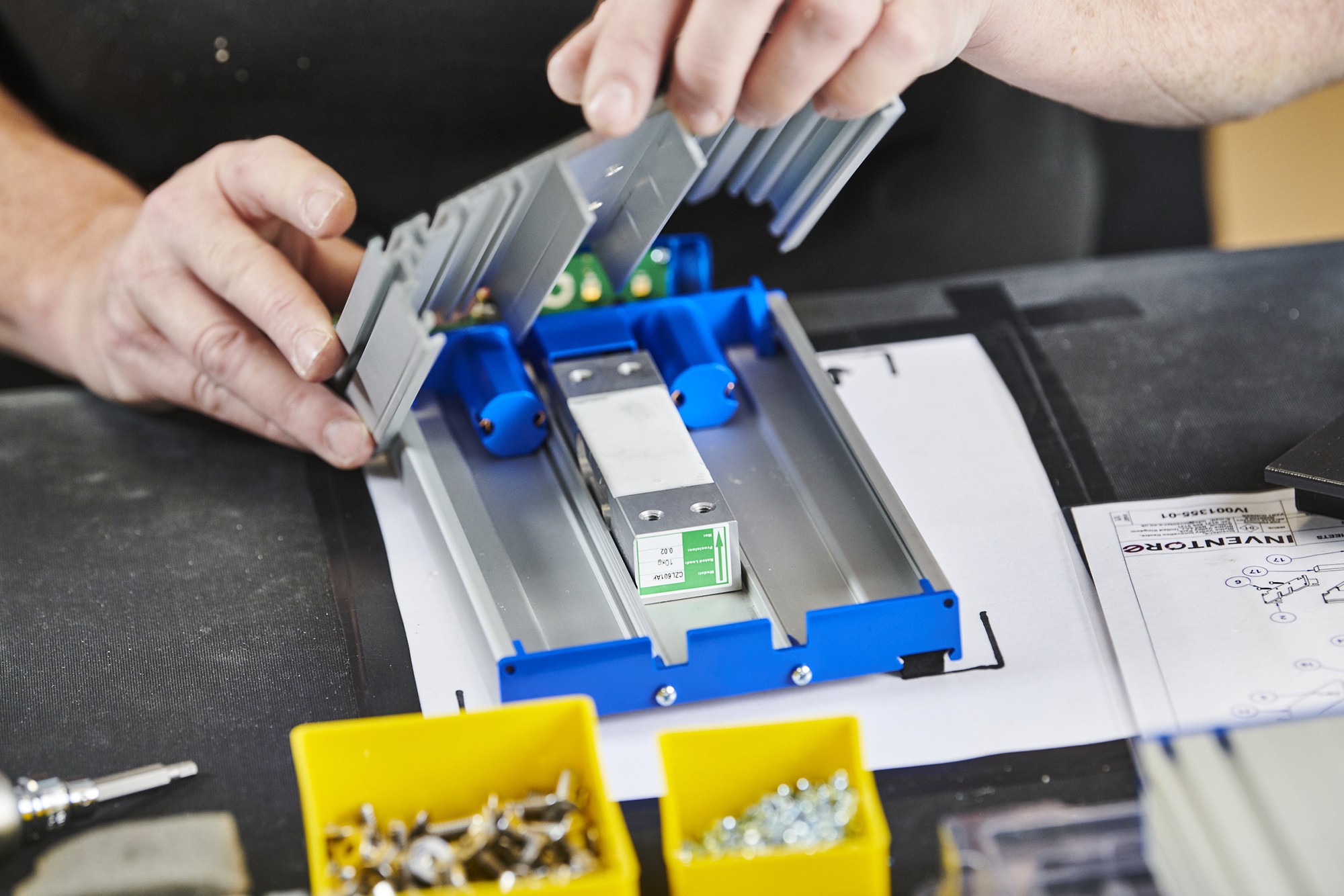
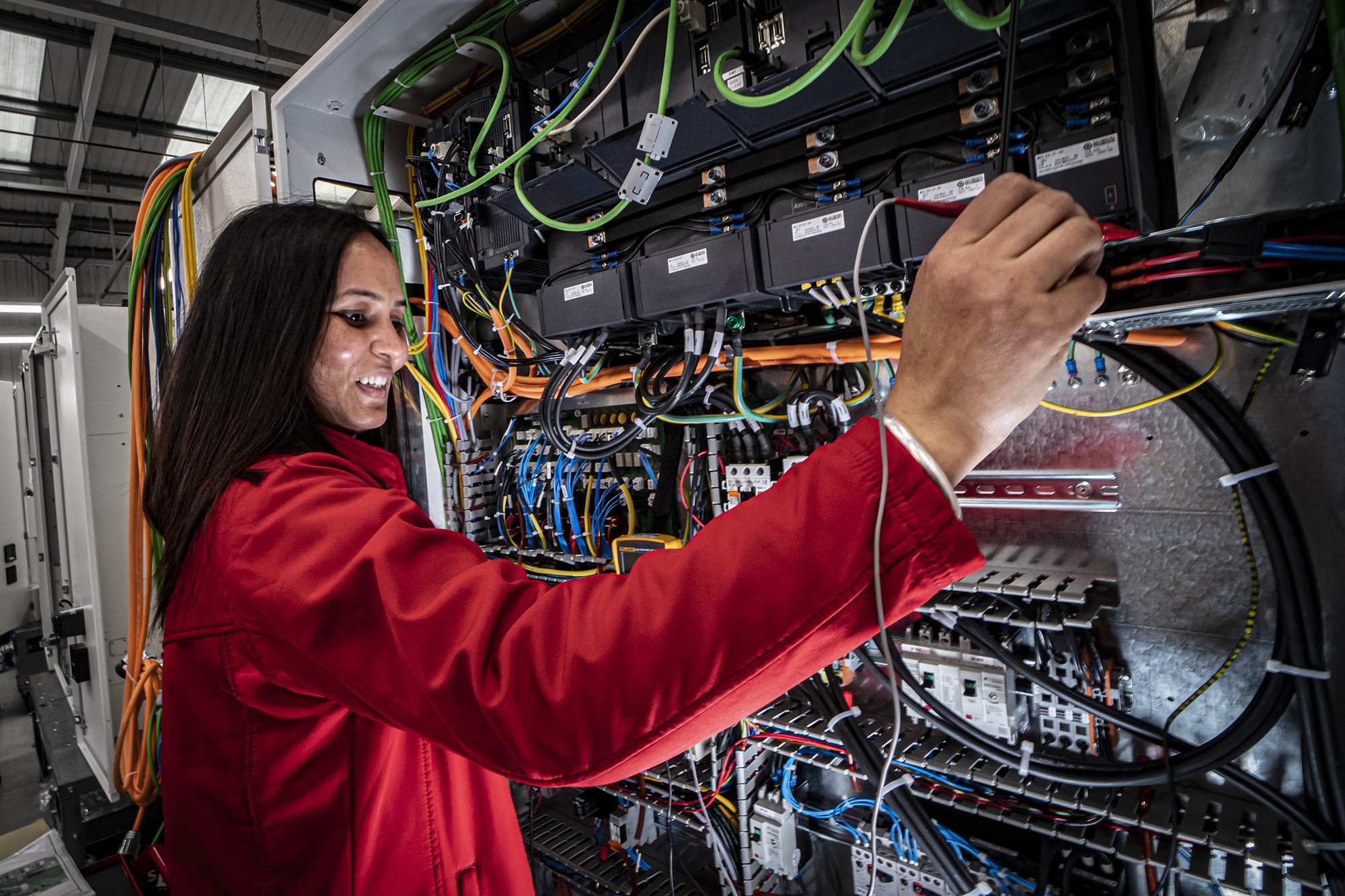
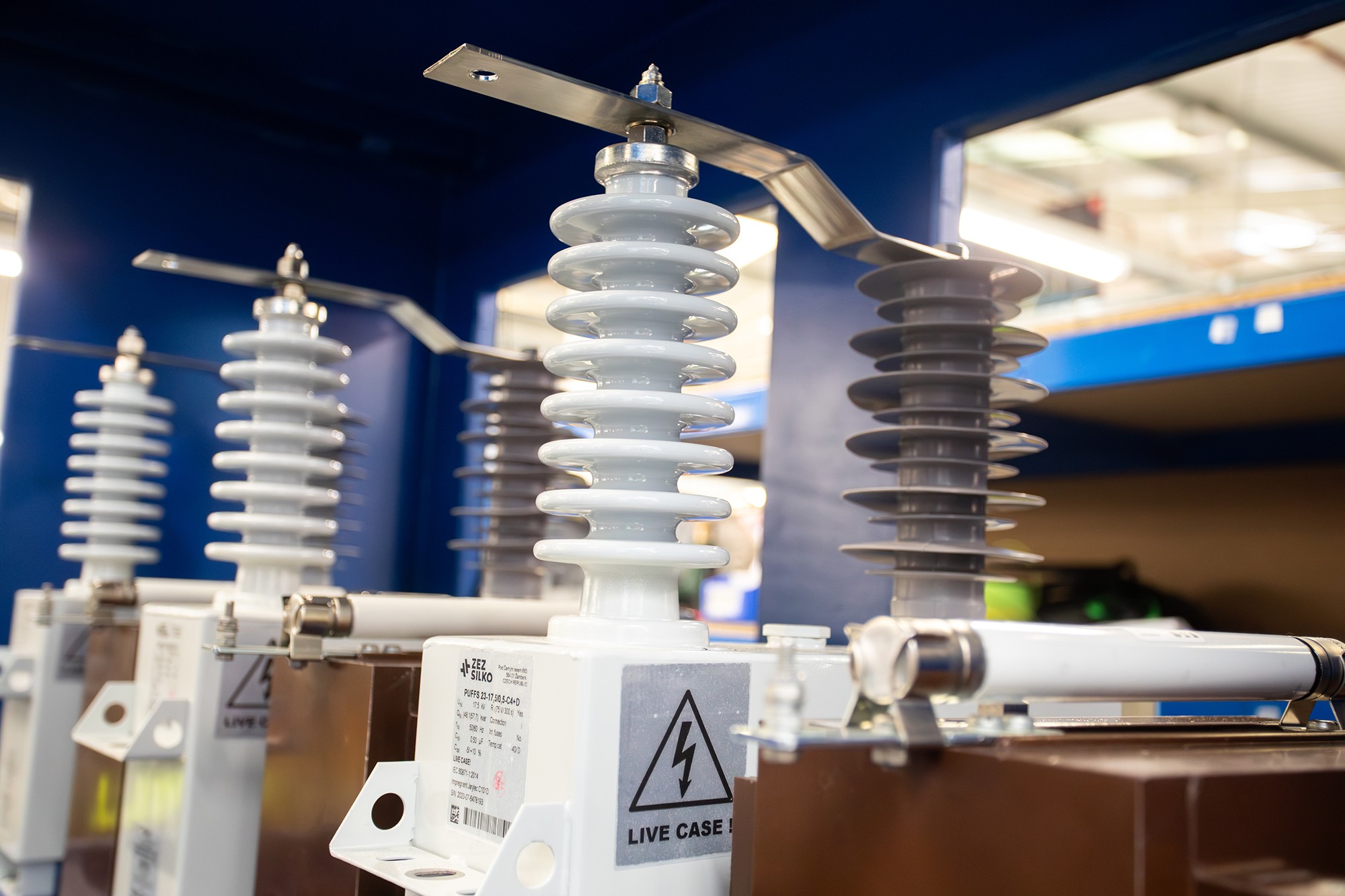

The blend zone is where internal and external capabilities intersect. It’s not outsourcing in the traditional sense. It’s not transactional. And it’s not about handing over responsibility. Instead, it’s about structuring a partnership that allows each side to focus on what they do best whilst maintaining alignment, visibility, and control.
In practice, this might look like:
Internal teams focusing on system architecture, customer requirements, and engineering intent
External partners delivering repeatable, high-quality build, assembly, and test processes
Shared ownership of documentation, change management, and continuous improvement
Crucially, the blend zone is not static. It evolves as your business evolves.
At low volumes, you may build more in-house to stay close to the product. As demand grows, you may shift towards external partners to unlock capacity and consistency. At higher maturity, you may rebalance again – focusing internal effort on innovation, whilst relying on trusted partners for execution at scale.
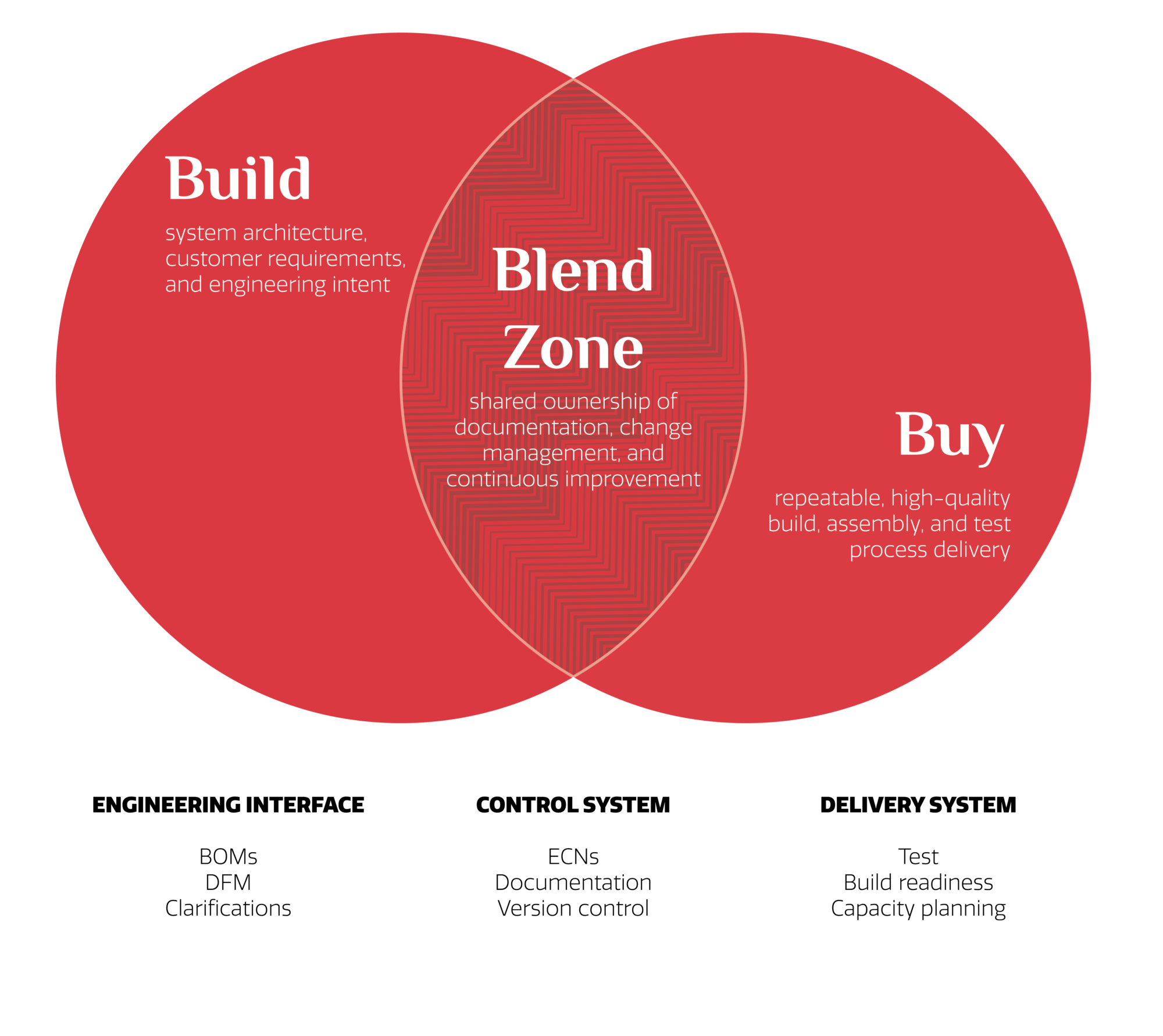

One of the fears that often accompanies this conversation is the perceived loss of control. But control doesn’t come from doing everything yourself, but rather, understanding where control matters most.
In most machine building environments, there are a few areas that should remain firmly internal:
System-level design and architecture
Customer-specific application knowledge
Intellectual property and proprietary processes
Final accountability for performance and compliance
These are the elements that define your business and where your competitive advantage typically sits. The mistake is assuming that everything connected to these areas must also be kept in-house. In reality, much of the surrounding execution can be structured in a way that supports, rather than dilutes, control.
At the other end of the spectrum are activities that are essential but not differentiating.
These are often:
Highly repeatable
Labour or resource intensive
Dependent on specialist infrastructure or skills
Difficult to scale efficiently in-house
Examples might include:
Holding onto these activities internally can create a false sense of control and often result in the quiet introduction of bottlenecks, variability, and hidden cost. Externalising them, when done properly, doesn’t mean losing ownership. It means freeing up internal capability to focus on higher-value work.
Perhaps the most overlooked benefit of a blended model is its impact on flow.
In many OEM environments, work doesn’t move smoothly from design through to build and delivery. Instead, it stops, starts, waits, and loops back. Capacity constraints, unclear ownership, and fragmented processes all contribute to this friction.
A well-designed blend can reduce these interruptions by:
Creating clearer handovers between design and build
Aligning documentation and change processes across teams
Smoothing capacity peaks and troughs
Introducing greater consistency in execution
In other words, it’s not just about who does the work, but how the work ‘moves’.
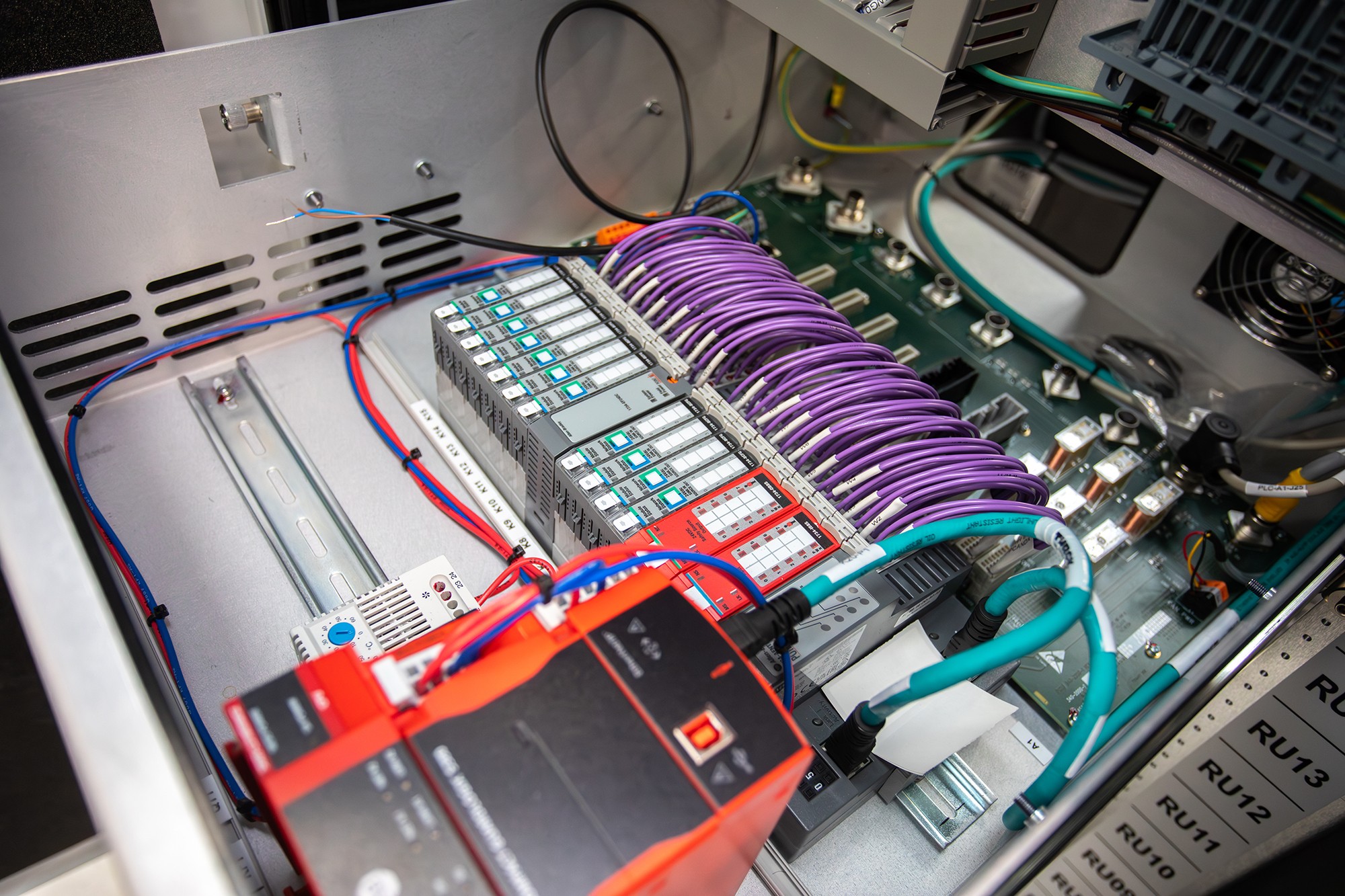
The question, then, is no longer “should we make or buy?” Instead, it is considerations such as:
Where should we focus our internal energy?
Where can external capability strengthen our system?
And how do we design the interface between the two?
This requires a shift in mindset. From ownership to orchestration, activity to value, and control to clarity. It also requires a willingness to challenge long-held assumptions around what is considered “core”.
For machine builders navigating increasing complexity, tighter timelines, and growing demand for customisation, the pressure on internal teams is only going to increase.
Trying to do everything in-house is no longer a badge of honour. In many cases, it’s a constraint.
The businesses that will thrive are those that take a more strategic view of capability by designing systems that are flexible, scalable, and aligned to where they create the most value. Not build. Not buy. But blend!
At PP Control & Automation, we see this shift happening in real time. More OEMs are moving away from rigid operating models and towards more dynamic, blended approaches, where internal expertise is complemented by external capability in a structured, intentional way. It’s never about outsourcing for the sake of it. It’s about building a system that works; not just today, but as your business evolves. And in that system, the question isn’t who does the work? It’s how well the whole thing works together.
One of the UK’s leading strategic manufacturing specialists is tapping into the UK’s unprecedented investment in upgrading the electricity grid.
As Britain accelerates investment in grid infrastructure, protection and control capacity could become a critical delivery constraint.

The appointment of a new Prime Minister inevitably brings renewed debate about the direction of the UK economy and what it could mean for business.

Ian Knight, Chief Information Officer at PP Control & Automation (PP C&A) challenges the prevailing, often vague narrative around AI adoption and reframes the conversation around a more practical starting point: operational constraints.
Artificial intelligence is no longer a distant concept for manufacturers. It is already being explored across quotation, production planning, engineering, quality, supply chain and customer service functions. Yet, for many organisations, the gap between experimentation and meaningful operational impact remains difficult to close.

A leading aquaculture specialist – that is changing the way fish are vaccinated safely – has signed a major manufacturing deal.

On paper, defined discipline-specific suppliers can look organised. However, every additional supplier introduces another handoff, and every handoff creates another point where time, quality, communication and accountability can be lost.

Very rarely does growth not surface because an OEM lacks ambition. Shortcomings arise because operating models built to support such ambition don’t evolve quickly enough.


